Why Floor Coatings Fail: Moisture, Laitance & the Prep That Prevents Callbacks
The floor looked right at handover. Six weeks later, there are blisters across the middle bay, and the coating is lifting in sheets where the forklift turns by the roller doors. Ask why floor coatings fail, and almost everyone starts with the tin. The wrong system, a bad batch, a cheap product. The product is rarely the problem. What sits underneath it is. And by the time the floor shows you, the space is already back out of use. This is what actually goes wrong beneath a coating, how each cause is found before the first coat goes down, and what it costs when nobody looks.
Why Do Floor Coatings Fail?
Floor coatings fail because of the slab, not the coating. Moisture moving up through the concrete pushes the film off from underneath; weak surface layers like laitance leave the coating bonded to something that is not itself bonded down; a trowelled-smooth surface gives it nothing to key into, and contaminants sit between the two. All four are preparation problems, and all four are detectable before a system is specified.
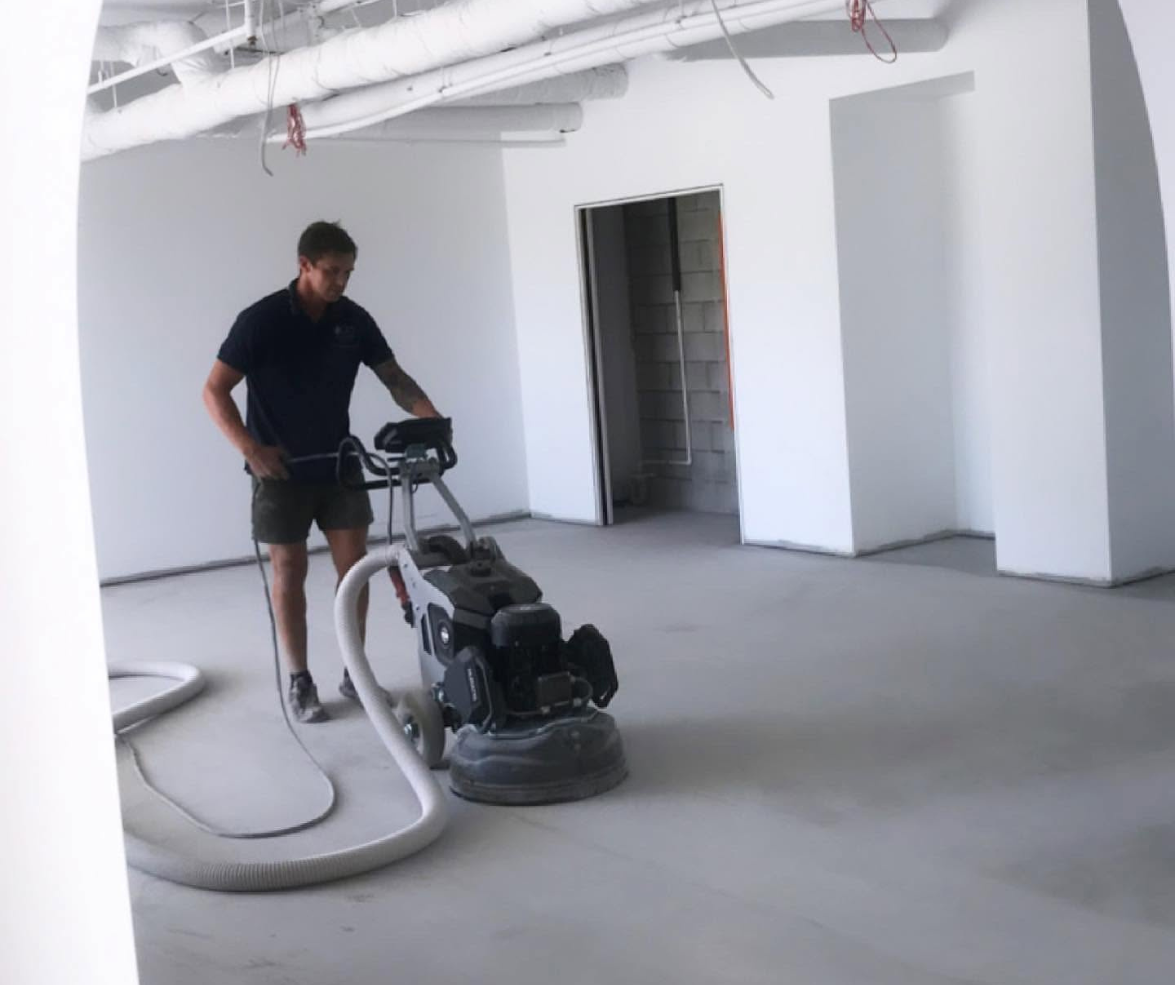
Coulson's Concrete Finishes prepares and finishes slabs for builders and project managers across the Gold Coast, Brisbane and Northern NSW, which also makes us the ones called back to the floors nobody prepared properly. Preparation sits at the centre of concrete floor
grinding and finishing for commercial and industrial sites.
What a Failing Floor Coating Actually Looks Like
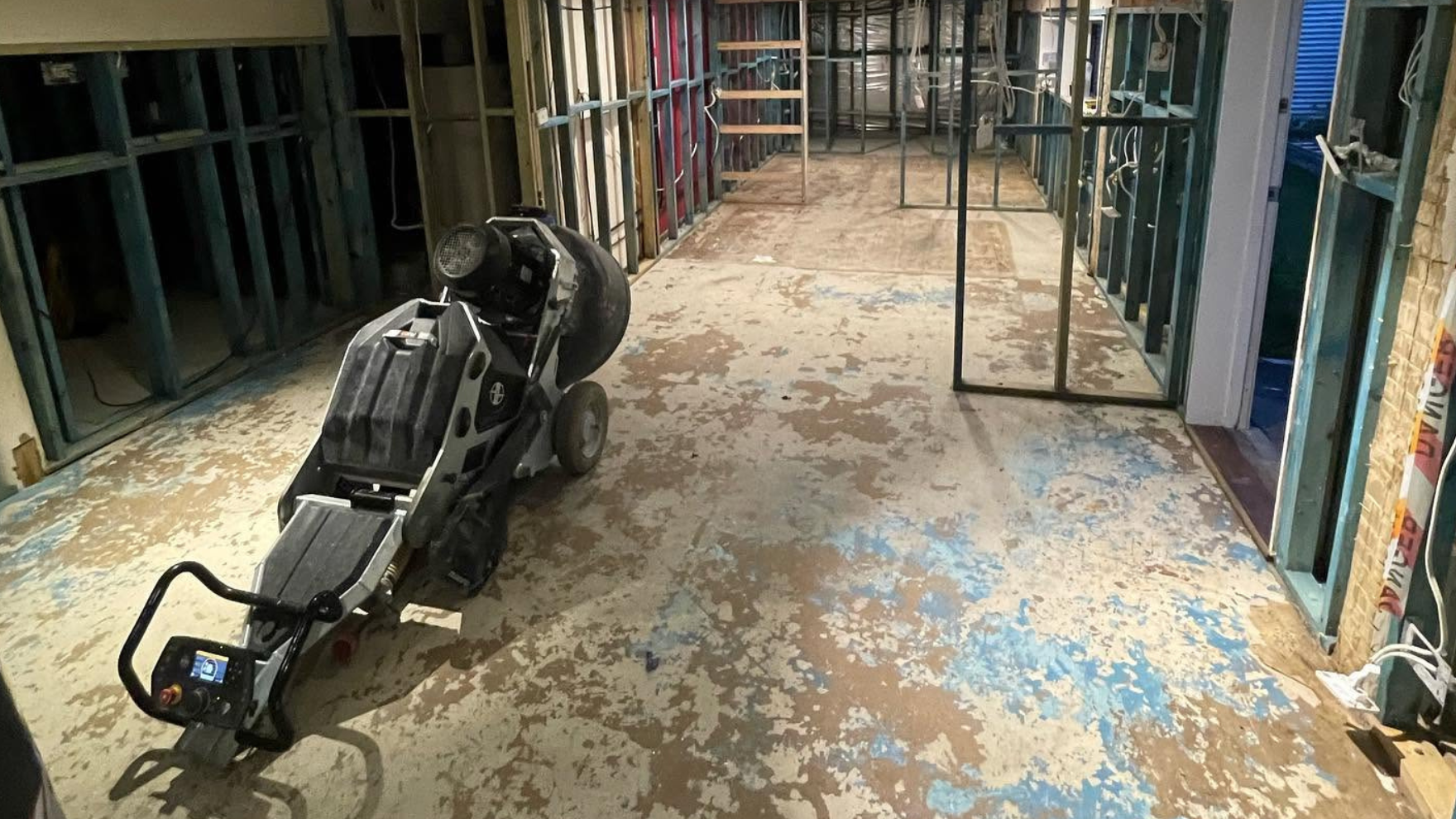
Blisters and bubbles. Peeling and coating delamination at edges, joints and penetrations. Pinholes across a whole bay. Cloudy patches, soft, tacky spots that never hardened, coating lifting in strips under vehicle tyres.
The timing is a useful tell. A floor that goes wrong within a day or two usually points to how the coating was mixed, applied or cured. A floor that looks perfect for weeks and then starts letting go points to moisture or bond, because those two need time to work.
| Symptom | Most likely cause | What it takes to fix |
|---|---|---|
| Blisters or bubbles appearing weeks after coating | Moisture vapour pushing up through the slab | Remove the coating, test the slab, install a moisture barrier primer rated to the reading |
| Peeling at edges, joints and penetrations | Weak surface layer or contamination left in place | Grind back to sound concrete and recoat |
| Coating lifting with concrete stuck to its underside | Laitance or friable surface, not a coating defect | Mechanical removal of the weak layer, then reinstate |
| Pinholing across a large area | Air escaping from an open surface during cure | Full removal and reinstatement with correct priming |
| Tacky or soft patches that never cured | Mix ratio or mixing error, or application outside the product's temperature window | Cut out and recoat the affected area |
| Wear or scuffing under tyre traffic | Coating trafficked before it cured, or specified too light for the use | Reinstate with a system matched to the traffic |
Moisture: The Failure That Turns Up Weeks Later
A slab is never completely dry. Water keeps migrating up through the concrete long after it looks and feels finished, and when a coating seals the top of it, that moisture vapour transmission has nowhere left to go. Pressure builds under the film until it lifts. The sources are predictable: a slab coated before it has dried far enough, no working vapour barrier beneath it, groundwater on a low-lying site, or condensation forming on a cool slab when humid air hits it.
On the Gold Coast and in Brisbane, this is a live risk rather than a textbook one. Coastal humidity sits high for much of the year, open sites take water through the wet season, and a slab baking at midday in February is still releasing moisture at four in the afternoon when someone wants to start rolling.
How Slab Moisture Is Properly Tested
Slab moisture is measured, not assessed by eye. In-situ relative humidity probes are drilled into the slab, sealed and left to equalise before reading, which tells you the moisture condition through the depth of the concrete rather than at the surface. Calcium chloride testing measures vapour coming off the surface over a set period, and answers a different question.
Taping a plastic sheet down overnight is a rough field indicator. It can tell you something is wrong. It cannot tell you a slab is ready. Australian flooring practice has settled on the same conclusion: the current resilient flooring standard,
AS 1884:2021, now carries the in-situ RH
probe test as its only normative moisture method, and coating manufacturers set their own limits in the same terms. A reading changes what gets specified, so it belongs before the quote rather than after the failure.
What Happens When a Slab Tests Too Wet
Two honest options, and neither is popular. Waiting costs programme time. A moisture barrier primer or vapour suppression system rated to the reading costs money. Both are cheap next to grinding a failed coating off a finished floor and starting again.
Expert tip: "It looks dry" is the most expensive assumption on a job site. A slab that has been under roof for months in a humid summer can still read well outside a coating manufacturer's limit, and the only way to know is a reading.
Why Laitance Is the Weak Layer Nobody Talks About
As a slab is finished, bleed water rises and carries fine cement and dust up with it. What dries on top is laitance: a thin, soft, cement-rich film sitting on perfectly sound concrete underneath.
The insight that matters is this. A coating bonded to laitance is bonded to a layer that is not itself bonded down. The product can be correct, mixed right and applied beautifully, and it will still let go, carrying a skin of concrete with it.
Laitance is easy to miss because it does not look like a defect. It looks like a clean, well-finished floor, which is exactly the problem. Sweeping, washing and acid etching do not reliably remove it. Mechanical removal does. Diamond grinding takes the surface back to sound concrete and opens the pores while it is there, which is why specifications call for it rather than a chemical shortcut.
Expert tip: The pull test tells you everything. If a lifted coating has a layer of concrete stuck to its underside, the concrete failed, not the coating. Look at the back of the piece before anyone blames the product.
Surface Profile: Why a Smooth Slab Will Not Hold a Coating
A coating grips concrete mechanically. It flows into an open, textured surface and locks into it as it cures. A slab polished tight by a power trowel gives it almost nothing to hold, which is why the floor that looks immaculate is often the worst candidate for a coating.
Concrete surface profile is how that texture is measured and specified, and systems differ in what they need. A thin roller-applied sealer needs less open surface than a high-build system laid several millimetres thick, and the manufacturer nominates the profile its system needs.
The methods are not interchangeable. Grinding gives a controlled, repeatable profile and removes weak material while it is there. Shot blasting opens an aggressive profile quickly across large open areas. Acid etching is used because it is cheap and fast, and it routinely leaves the surface short of what the system specifies while washing contaminants deeper into the pores.
So the question is never which method is better in the abstract. It is whether the profile the manufacturer specified was matched and verified. Our
concrete grinding and surface preparation work on the Gold Coast is built around hitting that number.
Contamination & Bond Breakers
A bond breaker is anything sitting between the coating and sound concrete. It does not have to be thick, or visible, or deliberate.
- Curing compounds and sealers applied by the concreter, often months earlier and not mentioned since
- Oil and grease soaked into older slabs, especially in workshops and plant rooms
- Paint, line marking and epoxy patches from a previous life
- Tile adhesive and levelling compound left after a strip-out
- Form release agents on tilt panels and slab edges
- Grinding dust left sitting in the open pores
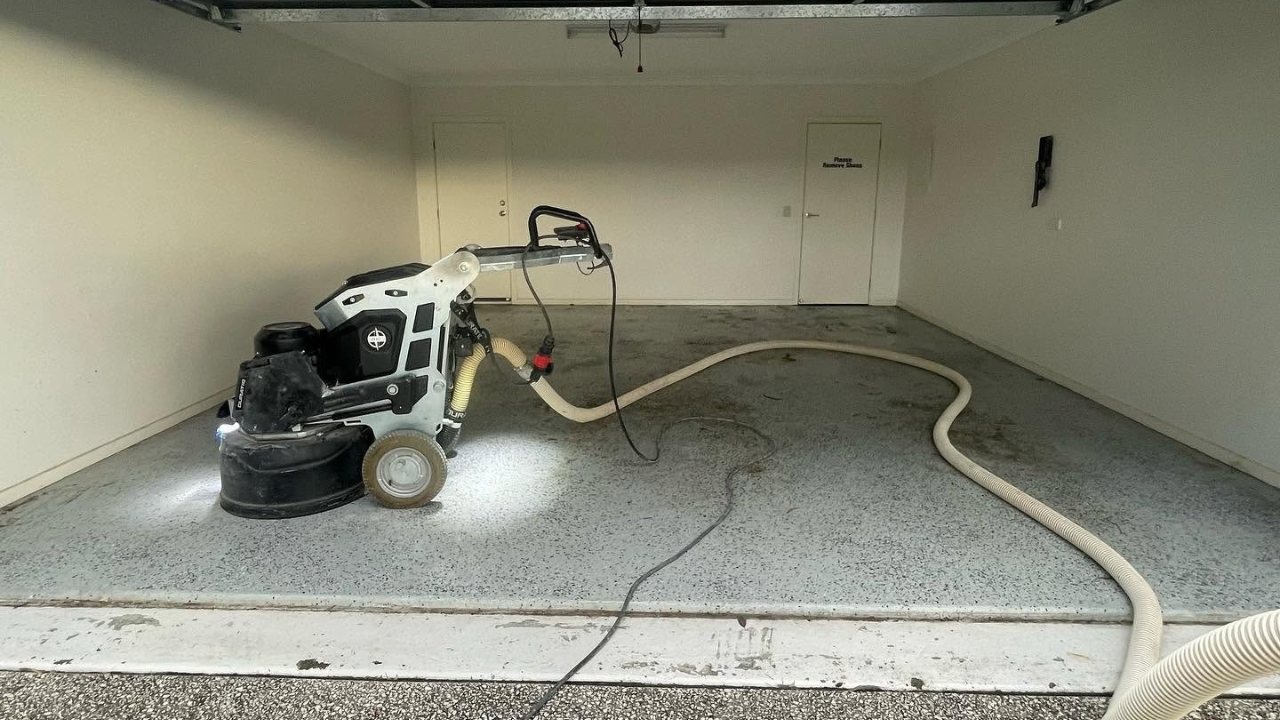
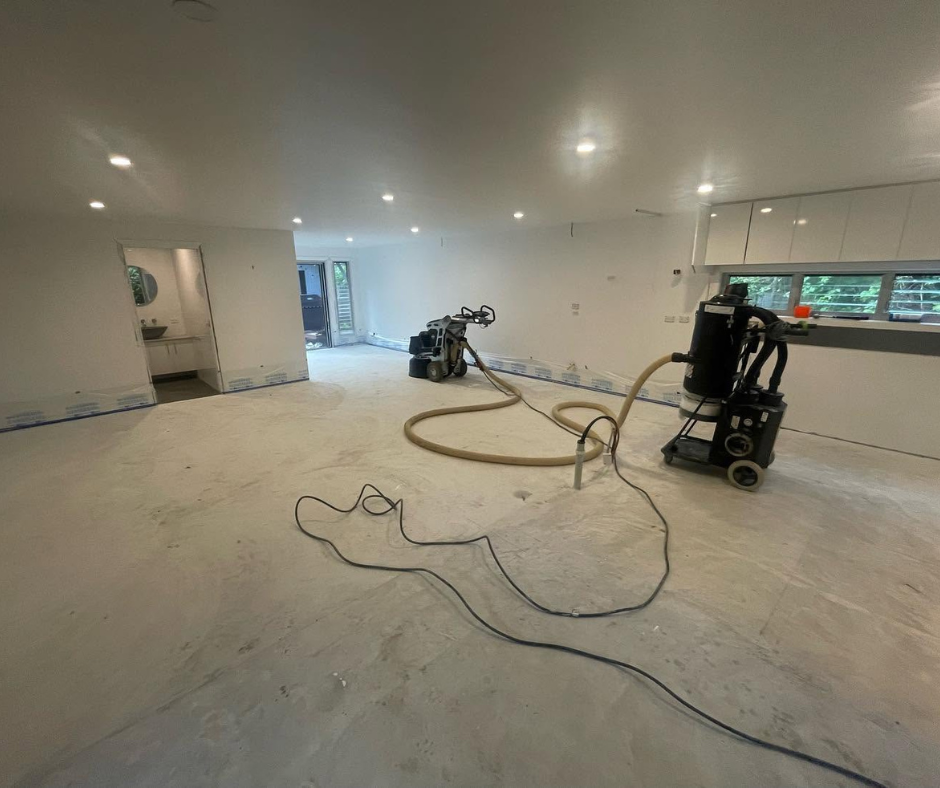
That last one catches people out. A slab ground to a textbook profile and left unvacuumed is still a contaminated slab, because the dust is now packed into the pores the coating needs to key into. Extraction is part of the preparation, not the clean-up afterwards, which is one of the reasons dust-free concrete grinding matters on occupied and indoor sites.
Wet grinding carries its own trap. Water put into a slab during preparation has to be completely gone before anything is coated, and on a humid site, that can add days nobody allowed for.
Substrate Problems That Prep Cannot Fix
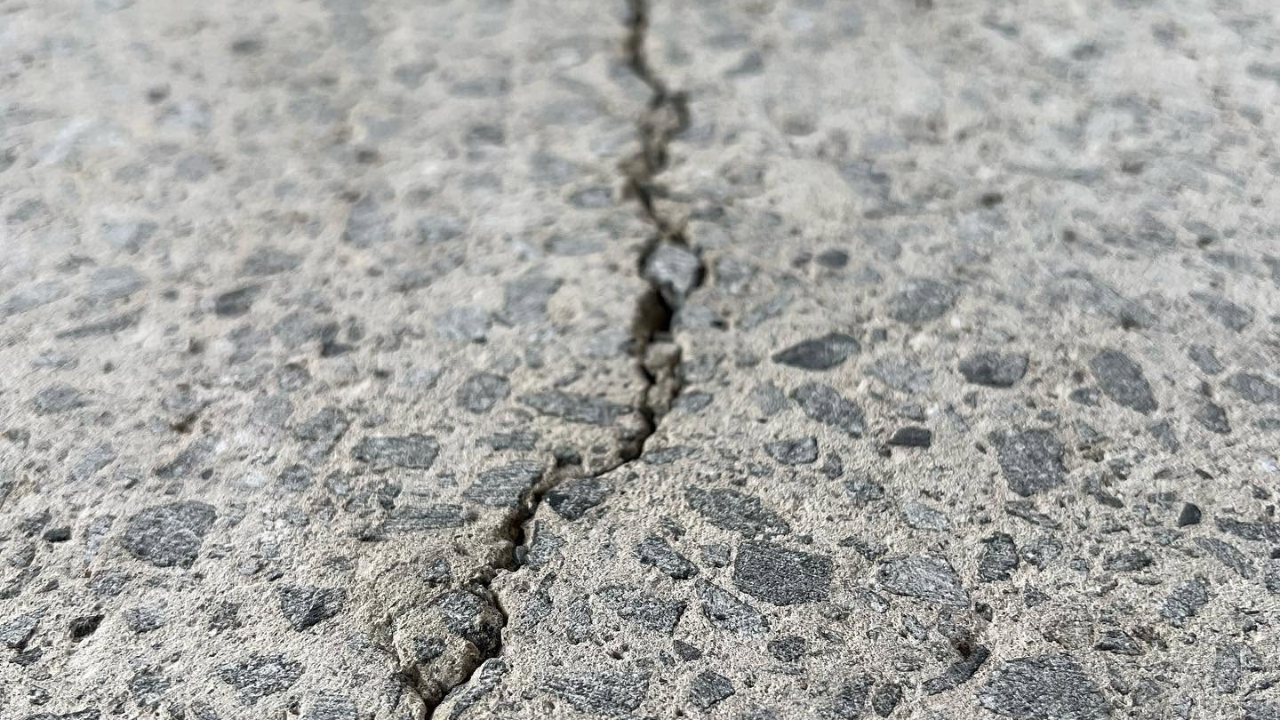
Some slabs are not coating candidates. Not after more grinding, not with a better primer.
Friable or low-strength concrete is the clearest case: if the slab pulls apart under the grinder, anything bonded to the surface will pull it apart too. Active cracking is the second, because a crack that is still moving telegraphs straight through a coating. Patched and overlaid floors are the third, since nobody knows what the earlier layers are or how well they are stuck down.
Cracks can be stitched, joints detailed, and soft patches cut out and made good. Some slabs still come back as repair, overlay or a different finish altogether.
Can all concrete be polished covers the same expectation gap on polished floors, and
concrete resurfacing is often the answer where a slab will not take a bonded system. We would rather tell a builder that at assessment than three months after handover.
Application & Curing Errors
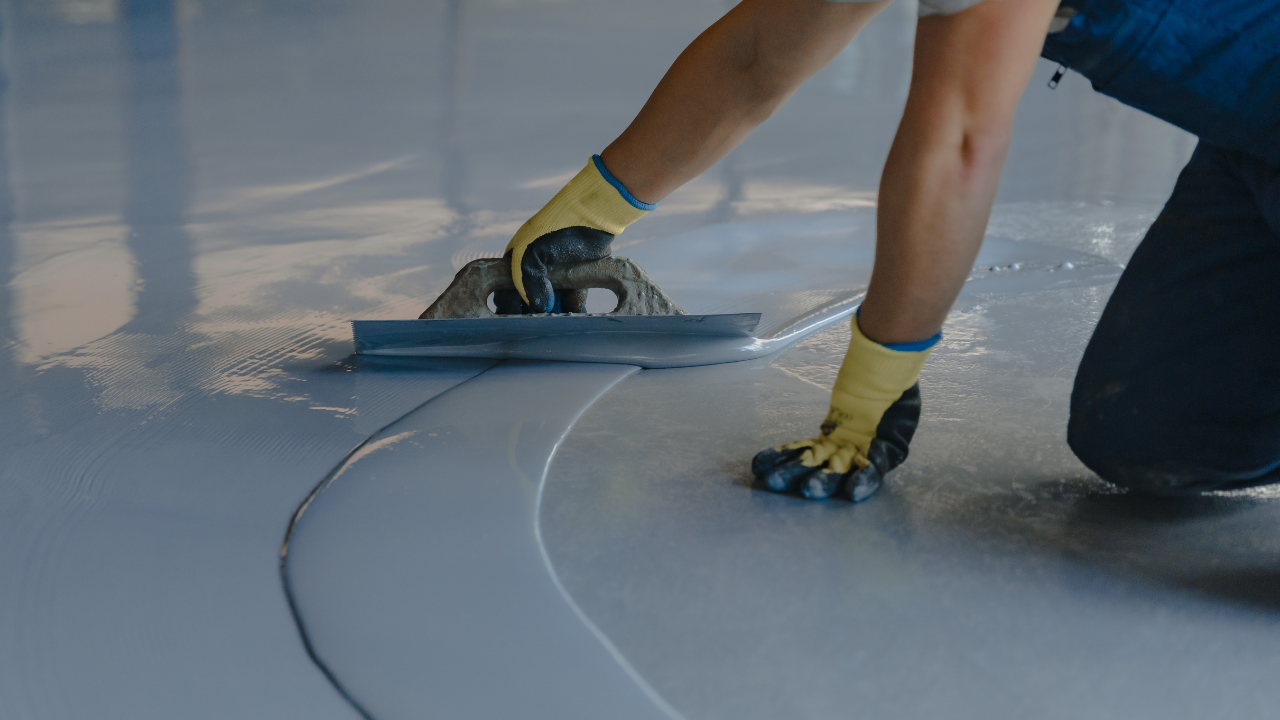
Preparation causes most failures, but not all of them. Mix ratios are not approximate: a batch mixed by eye, or mixed and left past its pot life, cures soft or never cures at all. A system laid thinner than its specified spread rate never reaches the film build it needs. And every product has a temperature and humidity window, which on a summer Gold Coast slab can close by mid-morning.
Then there is trafficking. A coating that feels dry underfoot is not cured, and the chemistry keeps developing for days after that. Walking, parking or running a plant across it early leaves damage that cannot be patched out invisibly.
For a builder, cure time is a programme line item, and compressing it is where a surprising number of failures start. For the product-level background,
epoxy flooring pros and cons sets out what these systems do and do not handle well.
The Prep Process That Prevents the Callback
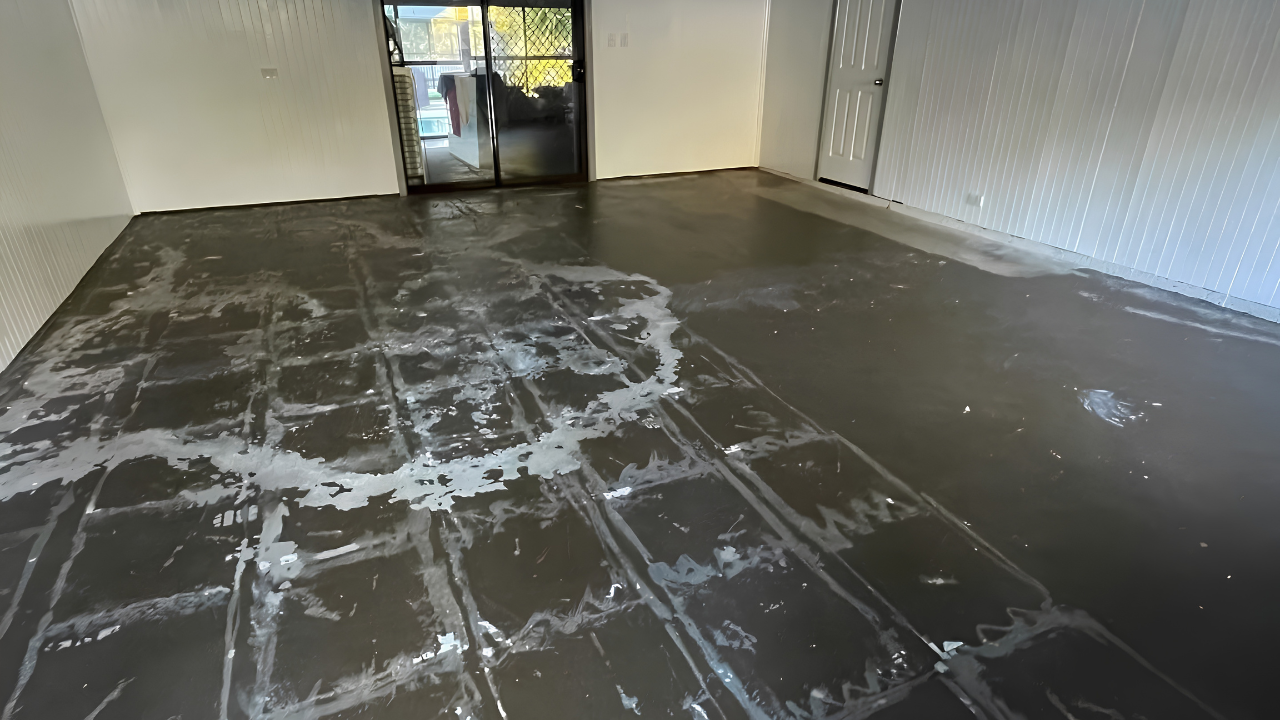
Every step below exists because of one of the reasons why floor coatings fail. That is the whole logic of the sequence, and it is why skipping one is never a saving.
- Assess the slab. Age, strength, existing coatings, cracking, joints, previous repairs, and what the space is actually going to be used for.
- Test for moisture. Readings taken and recorded before a system is specified, not after it is ordered.
- Grind mechanically. Remove laitance, coatings and contaminants, and open the surface to the profile the specified system requires.
- Repair cracks and joints. Stitch, fill, and detail before anything goes over the top.
- Extract thoroughly. Vacuum the pores out, not just the floor surface.
- Prime correctly. The primer matched to the substrate, the readings and the system above it.
- Coat. To the manufacturer's spread rate, within its temperature and humidity window, with the cure time protected.
Where an existing coating has to come off first,
coating removal by grinding is the step that gets the slab back to a surface worth coating, and there is more to
preparing a concrete slab before finishing than the grinding itself.
Who Wears the Cost When a Coating Fails
Rectifying a failed coating almost never means patching it. The whole floor comes off, the slab goes back to bare concrete, and the system is reinstalled from scratch. The second installation costs what the first one did, plus the removal.
Then there is everything around it. The space comes out of use again, racking gets emptied, trades move back on, and a fit-out that was finished gets unfinished. None of it was budgeted, because it arrives after practical completion.
Documented preparation is what keeps this from becoming an argument. A record of the assessment, the moisture readings, the specified profile and the primer matched to all of it puts the job on a factual footing for everyone on it.
What to Ask Before the Coating Goes Down
- Has the slab been moisture tested, and what were the readings?
- What surface profile does this coating system specify, and how will it be achieved?
- How will laitance and any existing contaminants be removed?
- What primer is being used, and why that one?
- How long before the floor can be walked on, and how long before plant or vehicles go on it?
- What happens if testing shows the slab is not ready?
The answers tell a specialist from someone about to create a problem. A finisher who can name the profile the system calls for, and the reading they took is working from a specification. One who says the floor looks fine is working from hope.
A coating is only ever as good as the slab underneath it. Whether a floor lasts years or lifts in six weeks is decided before the first coat goes down, in calls about testing, grinding and timing that cost very little at the time. Once a floor is down, densifying and sealing commercial concrete floors is what keeps it performing for the long haul.
If a coating is going onto a slab anywhere across the Gold Coast, Brisbane or Northern NSW, get in touch and have it assessed before the system is specified. You can reach us on 0433 512 156.
Key Takeaways
- The coating is rarely the cause of a coating failure. The slab underneath it almost always is.
- Moisture moving up through a slab is the most common hidden cause, and only a reading finds it.
- Laitance is a weak surface layer that looks exactly like a clean, well-finished floor.
- Surface profile is specified by the coating manufacturer and has to be matched, not guessed.
- Contaminants and leftover grinding dust sit between the coating and the concrete and break the bond.
- Rectifying a failed floor costs several times more than preparing the slab properly.
Frequently Asked Questions About Floor Coating Failures
Why is my new floor coating bubbling?
Bubbling usually means moisture vapour is pushing up through the slab and lifting the coating from underneath. It can also be air escaping from open concrete pores during cure, which tends to show as fine pinholes rather than blisters. The scale is the tell: isolated bubbles often point to application, while bubbling spread across a whole bay or along one side of a slab points to a slab moisture problem. That needs testing before anything is recoated, because a new coat over the same slab will do the same thing.
Why is my floor coating peeling at the edges?
Edge and joint peeling is a bond failure, and bond failures come from what was left on the surface. Laitance, curing compound, or dust in the pores will all stop a coating from keying into concrete, and edges are where prep most often gets rushed or missed with the grinder. A surface profile too smooth for the system is the other common cause. Turn a lifted piece over and look at the back: concrete stuck to the underside means the surface layer went with it.
Can a failed floor coating be patched, or does it all have to come off?
Isolated mechanical damage can often be cut out, prepared and repaired. Failure caused by moisture or poor bond cannot, because the cause is under the whole floor and not just the spot where it showed first. Patching those jobs buys a few months before the next blister appears somewhere nearby. Full removal and reinstatement is usually the only fix that lasts, which is exactly why the testing beforehand is worth the time.
What is laitance and why does it cause coatings to fail?
Laitance is the thin, soft, cement-rich film left on the surface when bleed water rises as a slab is being finished. It sits on top of sound concrete without being properly part of it. A coating bonded to laitance is bonded to a layer that will separate from the slab beneath, so the coating can be perfect and still fail. Mechanical grinding is the reliable way to remove it, because washing and etching leave most of it in place.
How do you test a concrete slab for moisture before coating?
The two quantitative methods are in-situ relative humidity probes, drilled into the slab and left to equalise before reading, and calcium chloride testing, which measures vapour coming off the surface over a set period. The probe test reads moisture through the depth of the slab rather than at the top, which is why Australian flooring standards now treat it as the normative method. A plastic sheet taped down overnight is only a rough field indicator and proves nothing on its own. Readings should be taken before a coating system is specified.
How long does concrete need to cure before it can be coated?
Time on its own is not the answer, which is the part that catches builders out. A slab needs to test within the coating manufacturer's moisture limits, and how long that takes depends on slab thickness, the mix, how well it was cured, ambient humidity and airflow across the surface. A thicker slab in a humid, closed-up building can take far longer than a thin one in moving air. Use a moisture reading to decide, not a date on the programme.
Is acid etching enough to prepare a floor for coating?
Rarely. Acid etching does not reliably remove laitance, curing compounds or oil, and it usually leaves the surface well short of the profile most coating systems specify. It can also drive contaminants deeper into the concrete and leave residue that has to be fully neutralised and rinsed, which puts water into a slab you are about to seal. Mechanical grinding is the professional standard because it removes weak material and creates a measurable, repeatable profile in one operation.
Does humidity on the Gold Coast make floor coatings more likely to fail?
Yes, in two directions. Slabs dry more slowly in high ambient humidity, so a floor that would be ready in a drier climate is still too wet here. And during application, humid air can push a cool slab past dew point, putting a film of condensation on the surface just as the coating goes down. It does not make coatings unworkable locally; it simply makes testing and timing the application window more important than they are elsewhere.
How long should a professionally installed floor coating last?
A properly prepared and correctly specified floor should reach the end of its life through wear, not through bond failure. In a light commercial or domestic garage setting, that means many years with routine cleaning. Heavy forklift traffic, chemical exposure or hot tyre contact will shorten it considerably. The variables that matter most are the traffic it carries, the system chosen for that traffic, and whether the slab was prepared properly. Coatings that fail inside the first year almost never fail from wear.
Who is responsible when a floor coating fails after handover?
In practice, investigation almost always traces the failure back to the substrate condition or the preparation, rather than to the coating product itself. That is why documentation matters so much: a record of the moisture readings, the specified profile, how it was achieved and which primer was used will establish what was actually done. Where that record exists, the conversation is about facts. Where it does not, everyone on the job is arguing from opinion about a floor that has already been paid for.