Uneven Concrete Grinding: Removing Trip Hazards on Commercial & Strata Sites
A tree root pushes one side of a slab up at a shopping centre entry. A joint in a strata walkway settles through a wet summer and leaves a lip across the path to the lifts. Nobody pays either of them much attention until someone catches a toe, and an incident report lands on a facilities manager's desk.
On a commercial or strata site, an uneven slab is not a cosmetic problem. It is a liability sitting in the busiest part of the property, in plain view, and usually one that somebody has already reported. The reassuring part is that grinding uneven concrete to remove a trip hazard is quicker and cheaper than most people expect. The harder question is knowing when grinding is the right fix, and when the slab needs more than a grinder.
Can Grinding Fix Uneven Concrete & Remove a Trip Hazard?
Yes. For most lipped joints and raised slab edges, grinding takes the high side down into a smooth, gradual transition, and the hazard is gone. It is far cheaper than replacing a section of slab; there is no cure time to wait out, and the area is usually walkable the same day.
The honest limit is that grinding treats the surface, not the cause. Where a slab is still moving, badly cracked, or lifted too far to take down without thinning it, that section needs replacing rather than grinding. Coulson's Concrete Finishes has been grinding and preparing concrete surfaces across the Gold Coast, Brisbane and Northern NSW for years, and our grinding and surface preparation work covers everything from single lipped joints through to full car park sweeps.
What Actually Counts as a Trip Hazard?
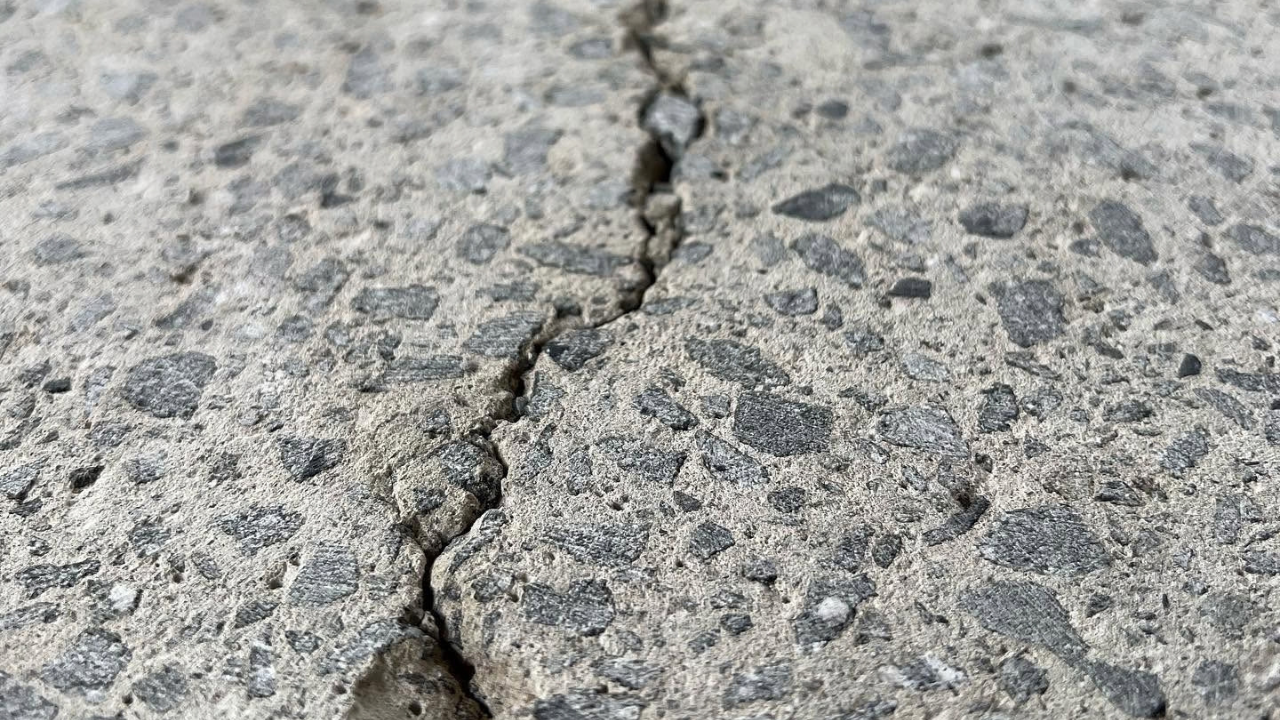
A trip hazard is a vertical change in level between two surfaces that is enough to catch something moving across it: a foot, a trolley wheel, a pram, a walking frame or the front castors of a wheelchair. It does not need to look dramatic to do damage.
The threshold is lower than most people assume
The lips that put people on the ground are rarely the ones that look alarming. A raised edge the staff have learned to step over is still a hazard to a visitor who has never walked that path before, and the fact that everyone on site already knows about it makes the position harder to defend once it is tested. Where the surface forms an accessible path of travel, the tolerance for level change is tighter again, because it has to work for people who cannot see the lip or cannot lift their feet over it.
As a reference point, AS 1428.1 allows a vertical change of up to 3 mm between abutting surfaces on a continuous accessible path of travel, or up to 5 mm where the edge is bevelled or rounded. Those figures are construction tolerances for new work rather than a maintenance threshold for an existing slab, so they are a guide to how little it takes to matter, not a line that decides whether a lip needs attention.
Setting matters as much as height
Two identical lips in different places carry very different risk. What we look at on site is the setting: whether the lip sits in a natural walking line, how well the area is lit, whether it gets wet, how much foot traffic crosses it, and whether the people using it are elderly, carrying things or managing a mobility aid. A small edge in a dark, wet doorway is a bigger problem than a larger one in a quiet corner. The useful question is not how bad it looks; it is how likely someone is to catch a foot on it.
Where they usually turn up
- Footpaths and common area walkways, especially near mature trees
- Car park aisles, speed humps and kerb transitions
- Entry thresholds and the first few metres inside a doorway
- Warehouse aisles and loading dock approaches
- Pool surrounds and barbecue areas on strata property
- Stair landings and the top and bottom of ramps
- Expansion joints running across a main path of travel
Why Concrete Lifts, Settles & Forms Lips in the First Place
Grinding a lip without understanding why it appeared is how a site ends up paying for the same repair twice. The cause usually tells you whether the fix will hold.
The usual culprits in South East Queensland
Tree roots are the most common, particularly figs and other large natives planted close to paths decades ago. Reactive clay soils are next, swelling through the wet and shrinking back through the dry, which lifts and drops slab edges on a seasonal cycle. After that, it is poorly compacted sub-base, water washing fines out from under a slab and leaving voids, heavy vehicle loading on slabs never designed for it, and slab edge curl where the top of a slab dries faster than the bottom. These are some of the common reasons concrete cracks, pits and spalls, and the extent of the damage determines
what can be fixed before finishing.
Movement that has stopped & movement that has not
This distinction decides everything that follows. Slab settlement that finished years ago leaves a static lip, and grinding it off solves the problem permanently. A slab still being pushed by a growing root, or riding a clay bed that moves with the seasons, will form a new lip after the old one is taken off.
Expert tip: No instrument tells you a slab has stopped moving, so we read the site instead. Has the lip changed since the last inspection or the last photo anyone has of it? Do the cracks look weathered or fresh at the edges? Does the slab sound hollow underfoot, which points to a void beneath it? Is there a downpipe, broken ag line or drainage path washing material out from under that exact corner? Four straightforward checks usually tell you whether you are grinding a finished problem or an ongoing one.
How Concrete Grinding Removes a Trip Hazard, Step by Step
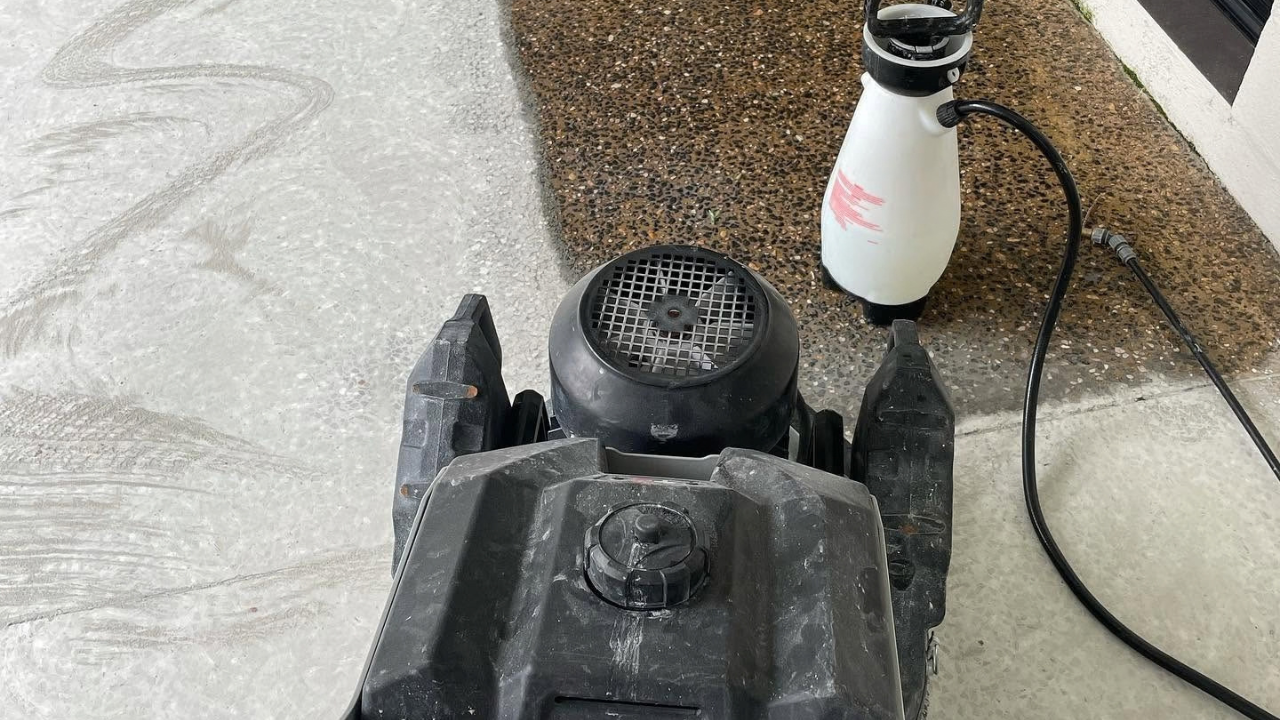
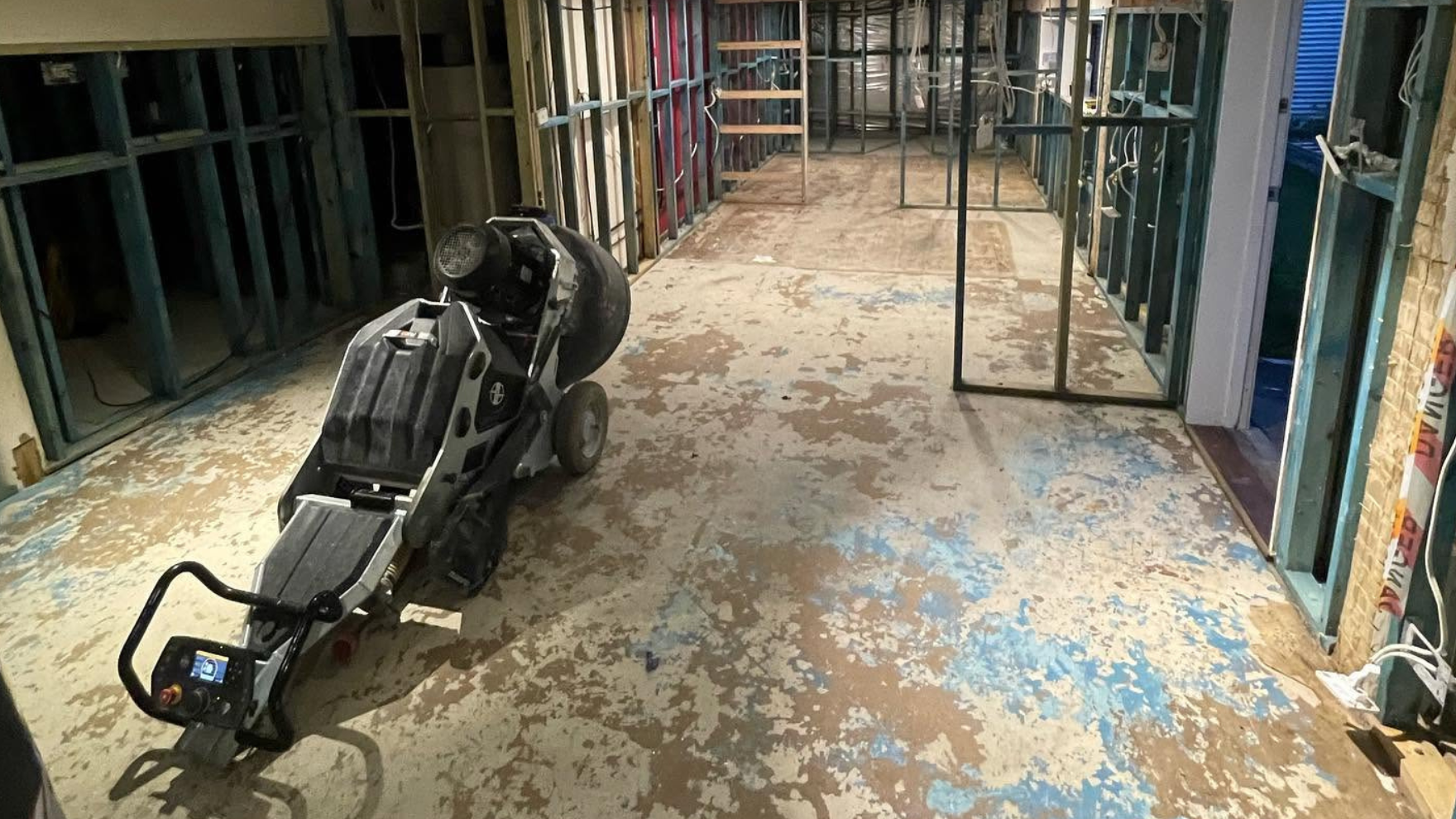
The work looks simple from the footpath. It is not. The difference between a professional result and a bad one is almost entirely in the setting out, and this sits within the wider picture of concrete floor grinding and finishing for commercial and industrial sites.
- Site inspection and hazard mapping. We walk the site and identify every level change, not only the ones already on someone's list.
- Measuring and recording. Each lip is measured, and its location noted, which gives you the scope, the quote and the start of a repair record in one pass.
- Marking out. The run of each grind is marked before anything starts, so the length of the taper is decided deliberately rather than by eye halfway through.
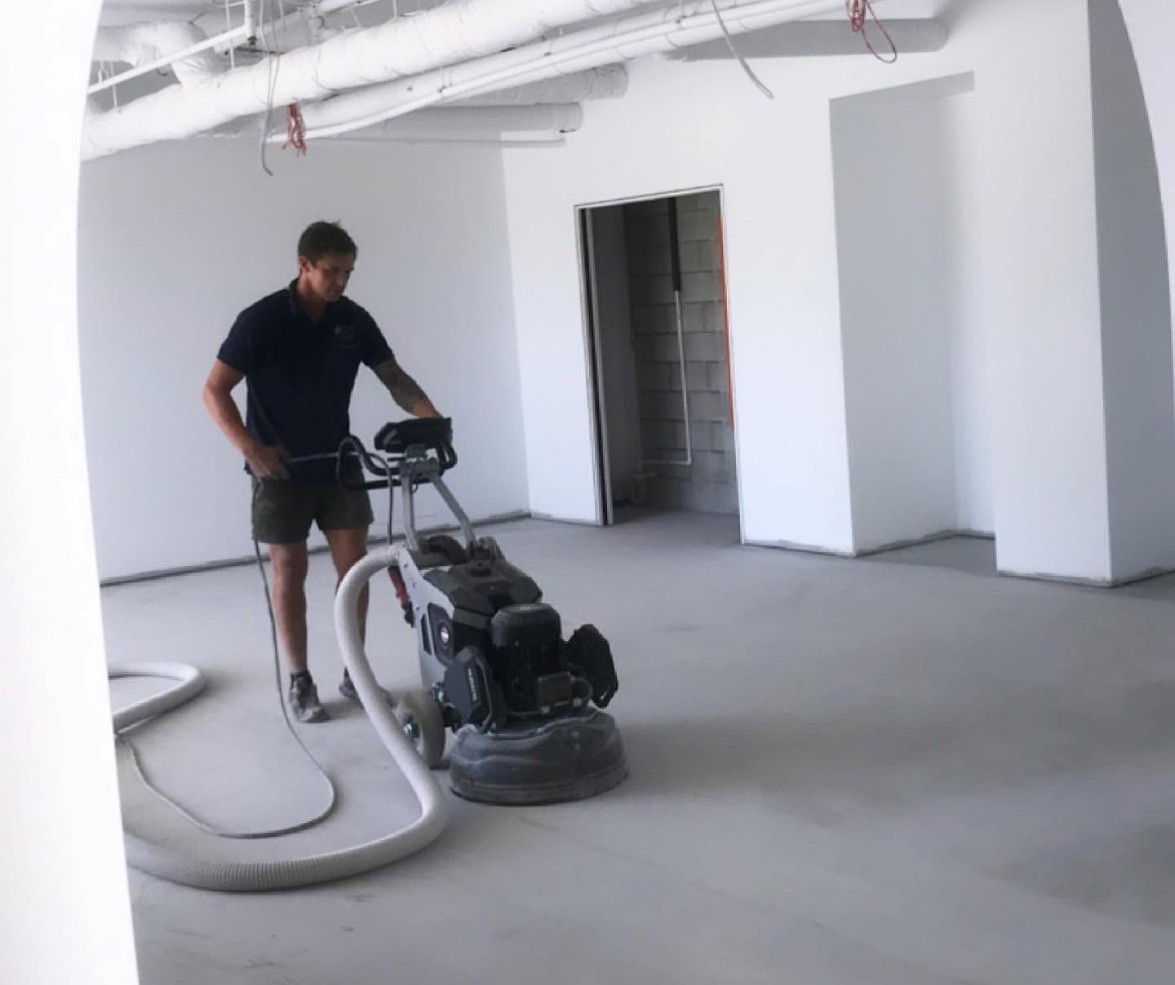
- Grinding the high side back. Diamond tooling takes the raised edge down progressively across the marked run.
- Blending into the surrounding surface. The ground area is feathered at the edges so it sits flush rather than forming a dish.
- Edge and detail work. Hand-held equipment handles what the walk-behind machine cannot reach, including work against walls, kerbs, thresholds and drainage grates.
- Final inspection and sign-off. Every hazard is re-checked, the area is cleaned down, and the completed work is documented.
A gradual transition, not a shorter step
The part most quotes skip is the taper. Taking 10 millimetres off the top of a lipped slab joint over a 50-millimetre run leaves a steep ramp that still catches a foot and looks like a scar. Running that same 10 millimetres out over a much longer distance gives you a slope the foot simply rides up, which is the entire point of the exercise. Longer runs cost a little more in time and are worth every minute.
What the finished surface looks like
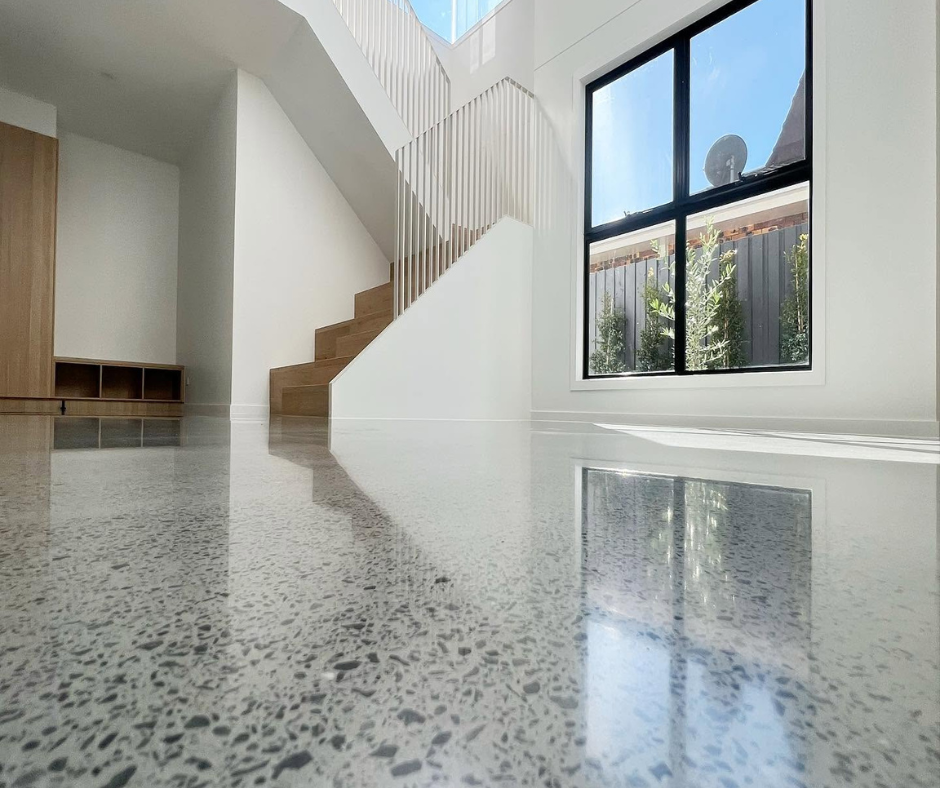
Better to tell you this up front than have you ring about it afterwards. Grinding exposes fresh concrete, so the repaired area will be lighter than the weathered surface around it and may show some aggregate. It is even underfoot, slightly textured and safe to walk on immediately. The contrast softens with weathering, and where appearance matters, a wider grind or a seal over the area evens it out. For the broader picture of what this equipment does across bigger jobs, our guide to grinding a concrete floor covers ground this post does not.
When Grinding Is the Right Fix & When the Slab Needs Replacing
Grinding is the right call when the lip sits within a grindable range, the slab around it is sound, movement has stabilised, the area needs to stay open, or there are many hazards across a site, and one budget has to cover all of them.
It is the wrong call when the slab is still actively moving, when the height difference is too great to take off without weakening the slab, when the concrete is already cracked, spalling or delaminating, or when the slab was thin to begin with. Grinding a slab that fails any of those tests buys a few months and creates a worse problem.
How the options compare
| Option | Best suited to | Site downtime | Relative cost | Expected lifespan | Appearance after |
|---|---|---|---|---|---|
| Grinding | Lipped joints and raised edges on sound slabs where movement has stopped | Hours, area usually open same day | Lowest | Permanent where the cause has stopped | Lighter patch that weathers in, even underfoot |
| Slab lifting and levelling | Settled but structurally sound slabs sitting low over a void | Short, usually same day | Moderate | Good where the void is the problem, poor where the cause continues | Little visual change, injection points visible |
| Patching or ramping compound | Temporary cover ahead of a scheduled repair | Short | Low upfront | Shortest, rigid patches tend to crack and lift at the edges | Obvious, and looks worse as it fails |
| Full replacement | Cracked, spalling, thin or still moving slabs | Days, including cure time | Highest | Longest, assuming the cause is addressed during the works | New concrete, which will not match the slabs around it |
Is grinding just a band-aid?
You will find this argument online, often from businesses that sell the alternatives. The fair version is that grinding is a surface fix, which is true. Uneven concrete and the trip hazard it creates are two related problems rather than one, and grinding solves the second without touching the first. Where the ground beneath a slab has settled and stayed settled, that is exactly the right level of intervention, and spending ten times as much to replace a sound slab achieves nothing extra. Where the ground is still moving, grinding is a holding measure and should be described as one.
Dust, Noise & Keeping the Site Open While Work Happens
Silica dust is the real issue & it is controllable
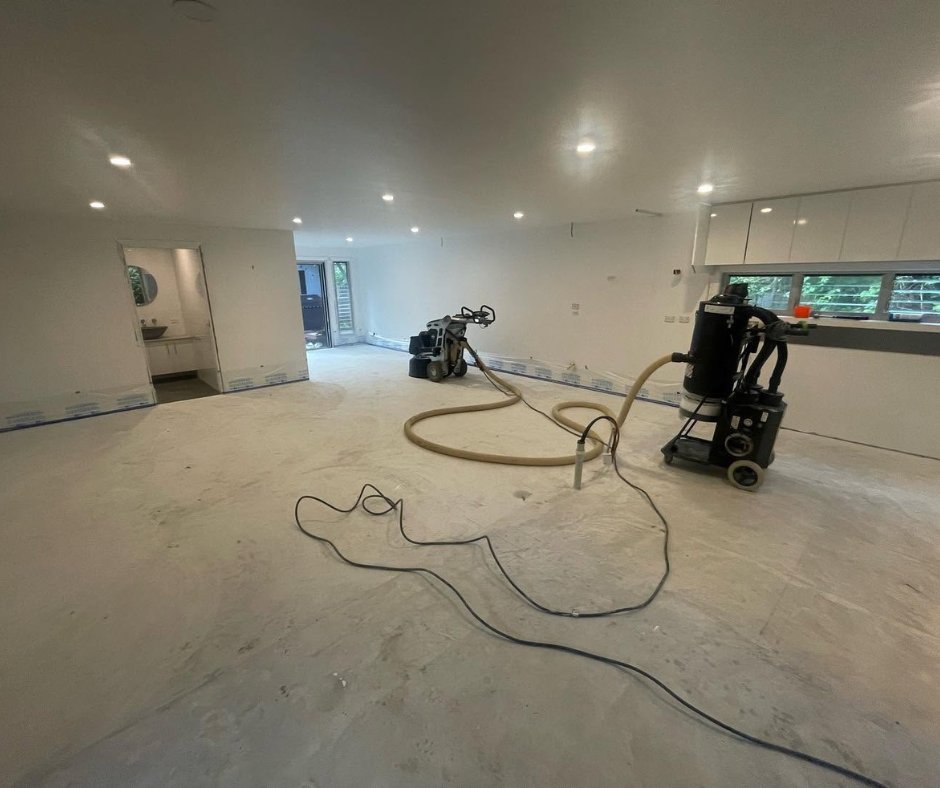
Grinding concrete generates respirable crystalline silica, which is a serious health risk rather than a housekeeping annoyance. Safe Work Australia sets a workplace exposure standard for respirable crystalline silica covering grinding, cutting and polishing concrete. On site, the answer is shrouded tooling run with vacuum dust extraction, capturing dust at the point it is created. That is the difference between a walkway that is clean the moment the machine stops and a building full of fine grey dust someone else has to deal with. Our post on dust-free concrete grinding on occupied and indoor sites goes further into how that gear works.
Staging the work around how the site runs
Very few sites need to close. Hazards are handled in sections, so a car park loses a few bays at a time rather than the whole level, and a retail entry keeps one side open while the other is worked. Scheduling trip hazard removal outside trading hours is routine on retail and hospitality sites, and early starts suit most strata buildings. Most single-site jobs finish inside a day, with larger sites staged across visits.
What residents & tenants need from you
Committees and facility managers get fewer complaints when people know what is coming. Notice a few days ahead, temporary barricading with a clear alternative route, and a realistic timeframe cover almost all of it. Telling residents the work will take an hour when it will take four is what generates the phone calls.
Liability, Duty of Care & Why Strata Sites Get Caught Out
Owners, body corporates and occupiers carry a duty of care for the people moving through their property. The practical consequence is simple: a hazard that was known about and left alone is far harder to defend than one that was identified, recorded and scheduled for repair. Nobody expects a site to be perfect. The expectation is that it is being managed.
Documentation matters as much as the repair
This is where most sites fall short. A hazard register with photographs, locations, measured heights and a risk rating turns a scattered set of repairs into a maintenance record you can produce when asked. Add a repair schedule and completion records, and the same information answers both questions that matter: what did you know, and what did you do about it.
Why strata sites get caught out
Common property walkways get used by everyone and owned, in practical terms, by nobody in particular. A lip just outside a lot entry sits in the grey area between the owner and the body corporate, so it gets raised at a committee meeting, noted, deferred for a quote and raised again at the next one. Meanwhile, the ground keeps moving. One scheduled sweep of the whole site usually costs less than the second round of quoting, and it closes out the register in a single visit.
What Affects the Cost of Trip Hazard Removal
Clearing a lip with a grinder costs a fraction of replacing the same section of slab, and the gap widens as the number of hazards grows. What moves the price on any given site is reasonably predictable.
- How many hazards there are, which is almost always more than the list you started with
- The height of each lip, since a taller lip needs a longer taper and more passes
- Surface condition, because cracked or spalling concrete around a lip changes the scope
- Access, including whether the equipment can reach the hazard or the work has to be done by hand
- Indoor or outdoor, and the level of dust control the space requires
- Site restrictions, out-of-hours access and traffic management
- Whether sealing or reinstatement is wanted over the repaired area afterwards
Volume is what actually moves the number
This work is bought by the site, not by the lip. Mobilisation, setup and traffic management cost roughly the same whether we grind one hazard or thirty, so the price per hazard drops sharply once a job covers a whole car park or walkway network. Calling someone back three times in a year for one lip at a time is the most expensive way to do this, by a wide margin.
The underlying problem is not a small one. Safe Work Australia reports 32,000 serious workers' compensation claims from slips, trips and falls in 2024 to 2025, with uneven surfaces among the contributing factors it names. Those are workplace claims rather than public liability claims, but the same walkways carry both.
What to Ask Before You Accept a Trip Hazard Quote
- Will you measure and document each hazard? A good answer includes photographs, locations and measured heights handed back to you, not kept as internal notes.
- How long will the taper be? You want a specific answer about the run of the grind, not a reassurance that it will be fine.
- What dust control do you use? Shrouded tooling with vacuum extraction. Anyone describing a hose and a broom is not set up for occupied sites.
- Will the area be walkable the same day? For grinding, yes, with the only caveat being a seal if one is specified.
- What happens if the slab is still moving? The honest answer is that grinding becomes a holding measure, and you should hear that before the work rather than after.
- Will you tell me if grinding is not the right fix? If every hazard on a site is quoted as a grind without anyone looking at slab condition, that is your answer.
- Do you price per hazard or per site? Beyond a couple of lips, a site rate almost always comes out ahead.
Staying Ahead of Trip Hazards Across a Whole Site
On a large site, pedestrian walkway safety is a rhythm rather than a project. Hazards do not arrive all at once. Ground conditions shift with the seasons, roots keep growing, and new lips form in a handful of predictable places while the rest of the property stays put.
A walk-through once or twice a year, timed after the wet season when seasonal movement shows itself, catches most of it. Record what has changed, batch the repairs into one visit, and watch the areas that have already proven themselves: mature trees, drainage lines, vehicle crossovers and anywhere delivery traffic turns. Booking a concrete grinding sweep alongside other planned maintenance costs less than reacting to each lip as it is reported, and it keeps the walkways on the maintenance calendar instead of in the complaints inbox.
One more thing worth watching. A joint that lifts again within a year of being ground is not a nuisance; it is information. It is telling you the cause was never addressed, and that section needs a different conversation.
Conclusion
On most commercial and strata sites, grinding takes a trip hazard out of a walkway in a morning, for a fraction of what replacement costs, with almost nobody noticing the work happened. The skill is not in running the machine. It is in reading the slab first, knowing which lips a grinder should never touch, and hearing that before the invoice rather than after.
If there are lips on your site that keep coming up at committee meetings or sitting on a maintenance list, we are happy to walk through and look at them. Get in touch, and we will tell you honestly which ones grind out and which ones need something else.
Key Takeaways
- A trip hazard is any vertical level change that can catch a foot or a wheel, and position, lighting and foot traffic matter as much as the height of the lip.
- Grinding uneven concrete to remove a trip hazard treats the surface rather than the cause, which makes it a permanent fix wherever the ground movement has already stopped.
- A slab that is still moving, cracked, spalling or thin needs replacing rather than grinding, and a contractor should tell you that before quoting.
- Vacuum dust extraction controls the silica dust grinding generates, which is what allows occupied car parks, walkways and retail entries to stay open while the work happens.
- On commercial and strata property, a documented hazard register and repair schedule carries as much weight as the repair itself when a fall is later investigated.
Frequently Asked Questions About Uneven Concrete & Trip Hazards
How high does a lip have to be before it is a trip hazard?
Lower than most people expect. Small vertical changes are enough to catch a toe, a trolley wheel or the front of a walking frame, particularly where the surface is wet, poorly lit or in a main walking line. Height is only one factor, and a modest lip in a busy doorway is a bigger risk than a larger one in a quiet corner. Tolerances tighten further on an accessible path of travel, which has to work for wheels and mobility aids as well as feet.
Can all uneven concrete be fixed by grinding?
No, and anyone saying otherwise has not looked at the slab. Grinding suits lipped joints and raised edges on sound concrete where movement has stopped. Where a slab is actively moving, cracked, spalling, delaminating or thin to start with, taking material off the top weakens it without solving anything. In those cases, the section needs replacing, and we will say so.
How long does trip hazard grinding take?
Most single-site jobs finish within a day, including setup, grinding, edge work, and clean-down. Larger sites such as multi-level car parks or extensive walkway networks are staged across several visits so areas can stay open. We can give you a realistic timeframe once we have walked the site and counted what is actually there.
Will the ground area look different from the rest of the concrete?
Yes, at first. Grinding exposes fresh concrete beneath the weathered surface, so the repaired area will look lighter and may show some aggregate. It is even and safe to walk on straight away. The contrast softens over several months, and where appearance matters, widening the grind or sealing the area reduces the difference.
Do we have to close the car park or walkway while the work is done?
Usually not. The work is staged in sections with barricading and a clear alternative route, so a car park loses a few bays at a time rather than the whole level. Out-of-hours and early morning work is routine for retail, hospitality and strata sites where daytime access matters. Full closure is rare and would be flagged before the job starts.
Is concrete grinding dusty?
It is, when it is done without extraction, and that dust contains respirable crystalline silica, which is a genuine health risk rather than a mess. Properly equipped operators run shrouded tooling connected to industrial vacuum extraction, capturing the dust as it is generated. Done that way, the area is clean and usable as soon as the machine stops. It is a fair question to put to any contractor quoting work inside an occupied building.
Who is responsible for fixing a trip hazard on common property?
Generally it falls to the body corporate or the owner of the common property, though the arrangement varies between schemes and depends on where the hazard sits. Lips just inside a lot boundary are often the grey area that causes delay. Check your scheme's by-laws and any agreement in place rather than assuming, and get the hazard on the register either way while responsibility is sorted out.
Is grinding cheaper than replacing the concrete?
Substantially, in almost every case, and the gap grows with the number of hazards. Replacement means demolition, removal, new concrete, cure time and an area closed off for days. Grinding is measured in hours and leaves the surface usable immediately. Where the slab is sound and the movement has stopped, the ground repair lasts just as long as a replacement would.
What happens if the slab lifts again after grinding?
It means the movement that caused the original lip never stopped. Usually that points to a growing tree root, reactive clay, a void beneath the slab or water getting underneath it. The next step is addressing the cause rather than grinding the same joint twice, which may mean root management, drainage work or replacing that section. We will tell you if we think that is likely before the first grind, not after the second.
Does Coulson's do trip hazard removal on commercial & strata sites?
Yes. We handle grinding and surface preparation across the Gold Coast, Brisbane and Northern NSW, from single lipped joints through to full site sweeps on car parks, walkways and common property. Get in touch, and we will come and look at what you have.