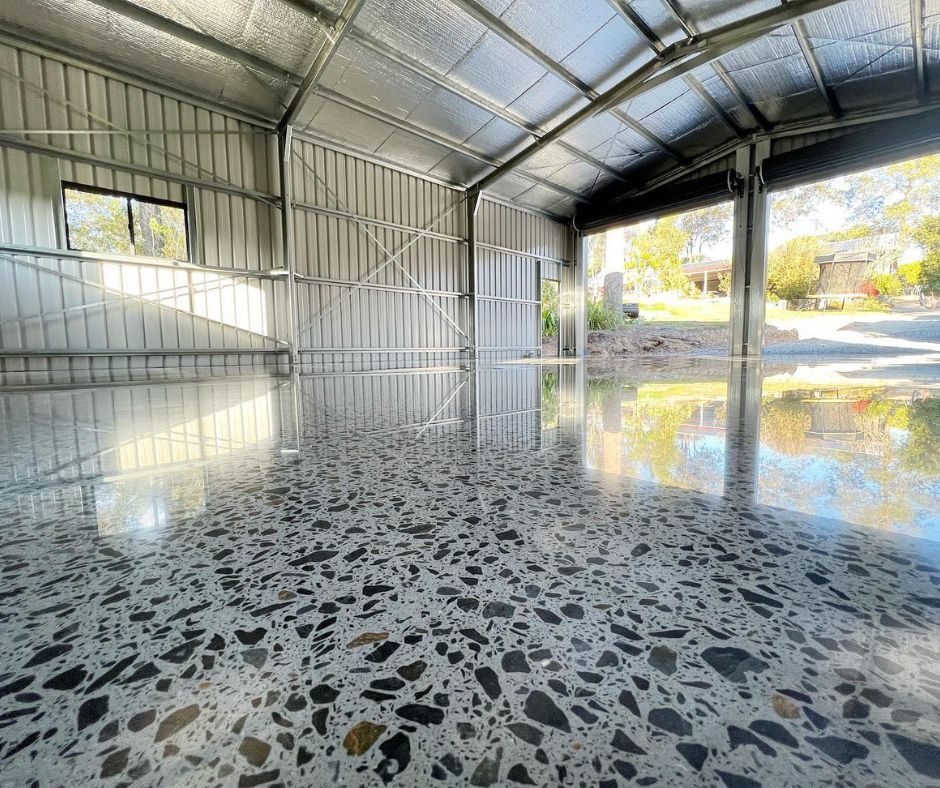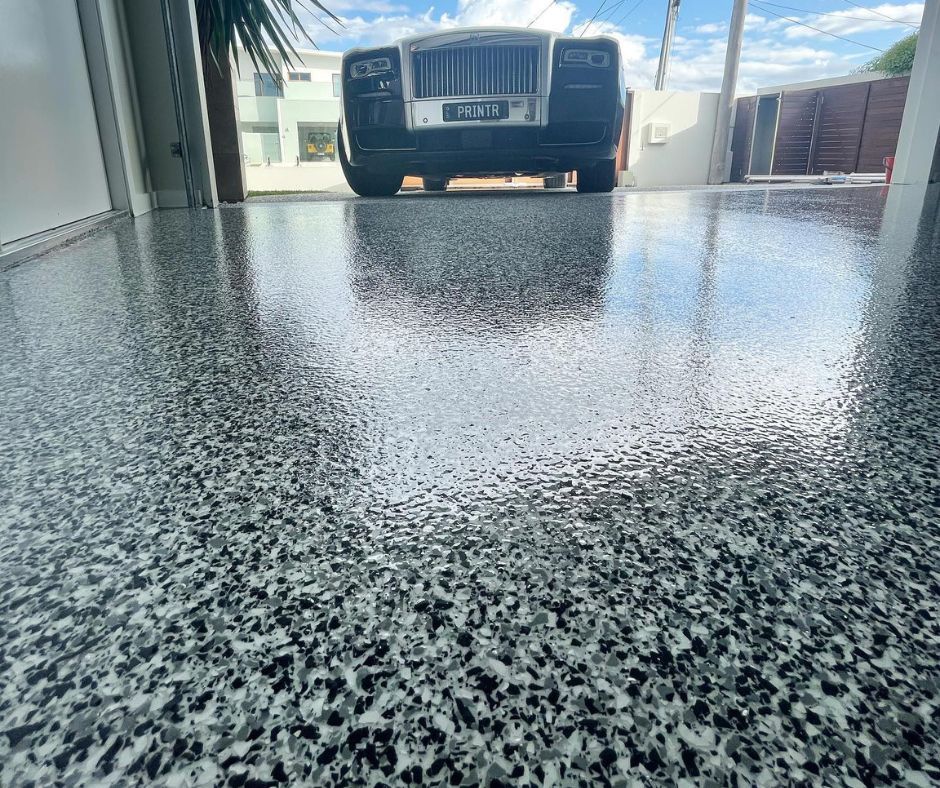
Dust-Free Concrete Grinding: Why It Matters on Occupied & Indoor Sites
Grind a concrete floor with no dust control, and you don't just make a mess. You fill the air with fine silica particles, coat every surface in the building with grey dust, and create a real health hazard for anyone nearby. On an empty new build, that might be manageable. In an occupied home, a trading shop or a working office, it is a serious problem.
That is exactly why dust-free concrete grinding exists. It lets us prepare, level or strip back a concrete floor in a space where people are still living, working or shopping, without turning the place into a dust storm.
Get it right, and the difference is night and day. Below, we run through what dust-free grinding actually involves, where it matters most, and the questions worth asking before you let anyone run a grinder inside your building.
What Is Dust-Free Concrete Grinding, & Why Does It Matter Indoors?
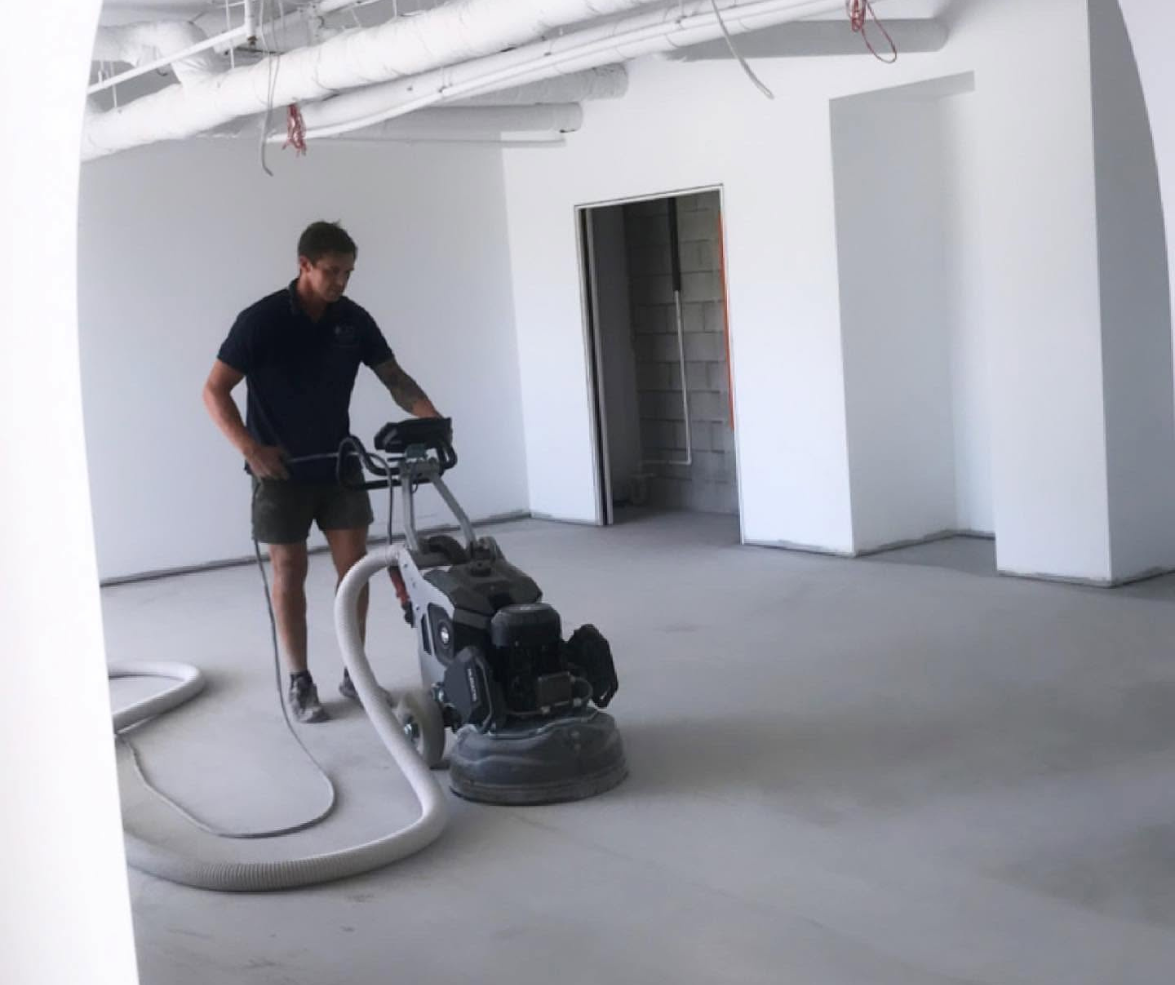
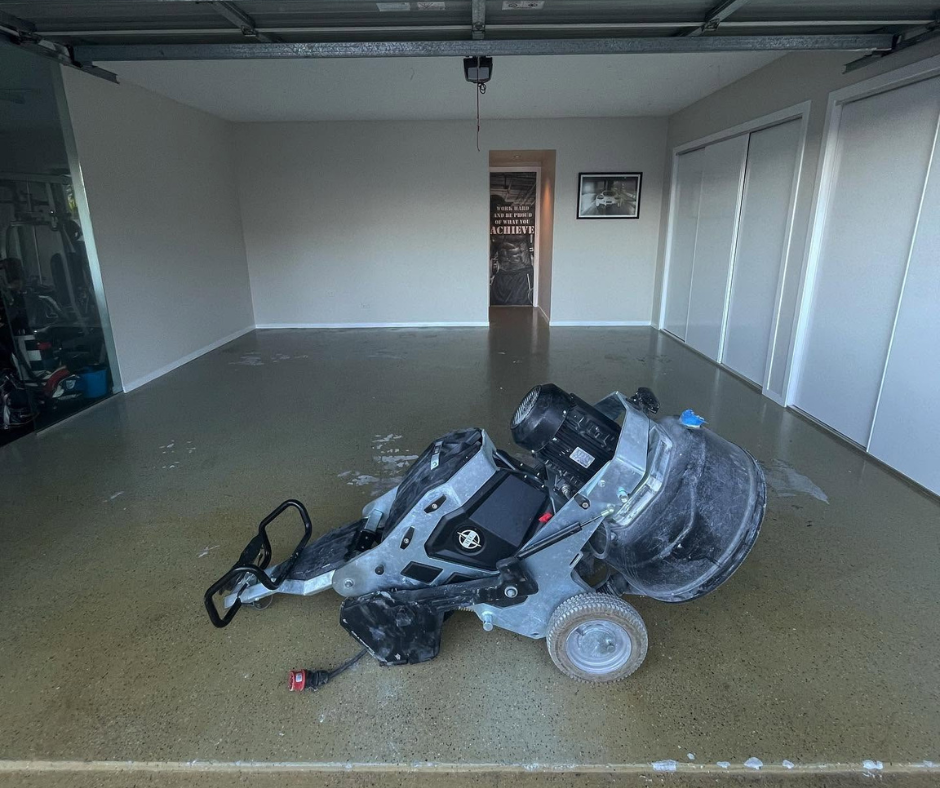
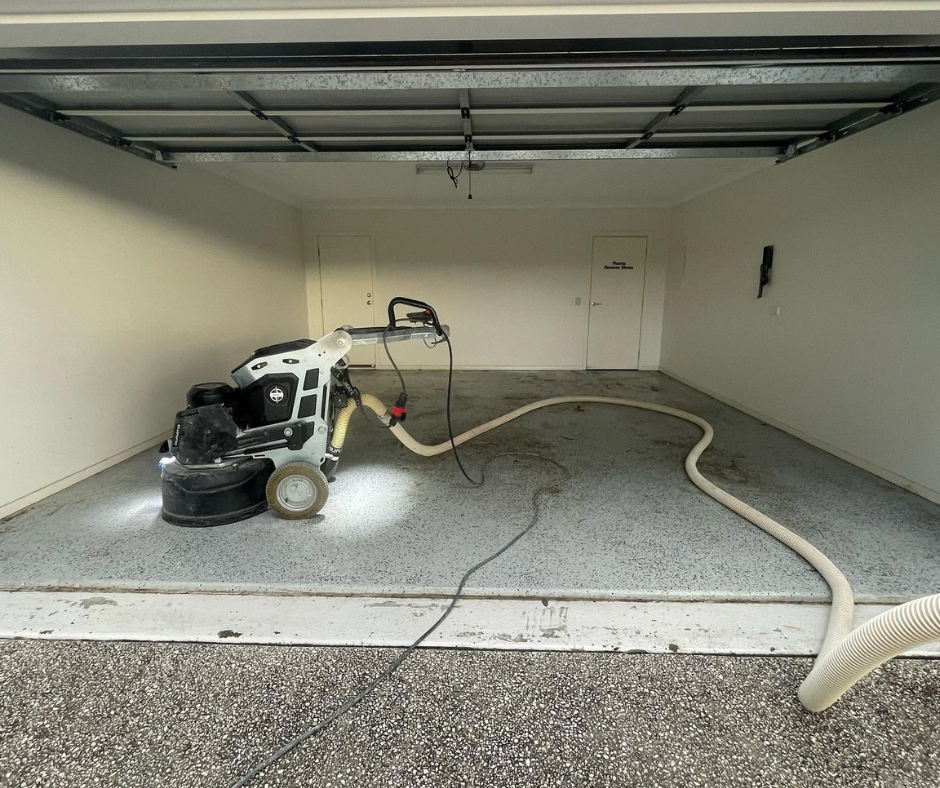
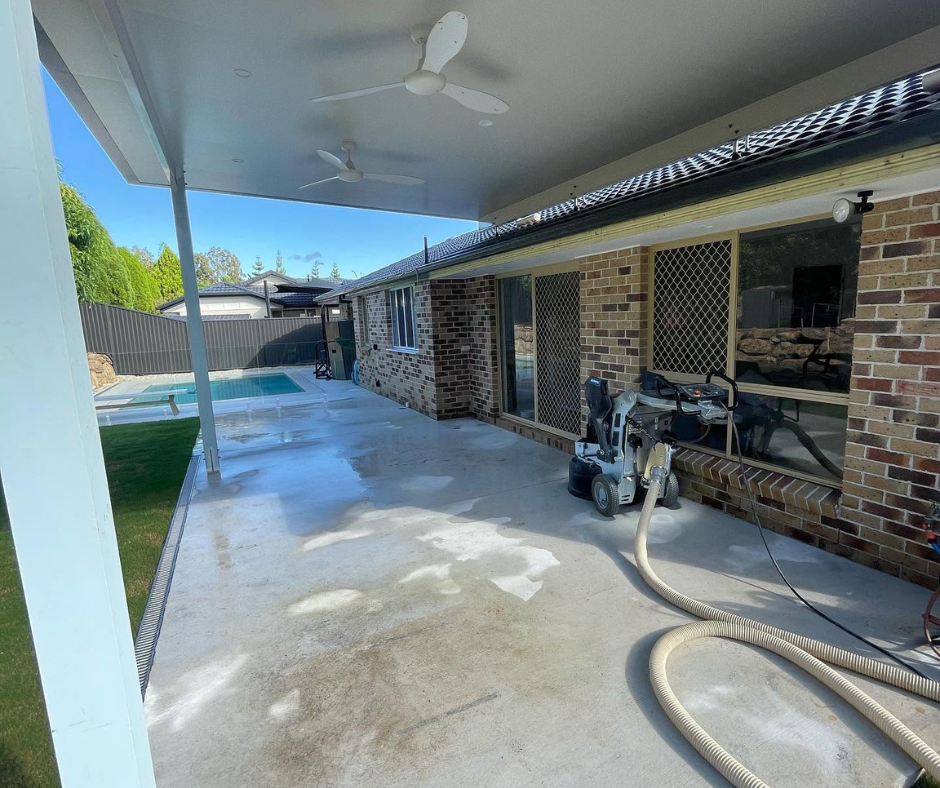
Dust-free grinding uses a grinding machine fitted with a sealed shroud and connected to an industrial HEPA vacuum, so the silica dust is captured the instant it is created, before it can drift through the air. On occupied and indoor sites, this matters because it protects people's health, keeps the space clean and usable, and helps meet Australian work health and safety duties around silica dust. It is the standard we hold every concrete grinding and surface prep job at Coulson's Concrete Finishes, working across the Gold Coast, Brisbane and Northern NSW.
Is Truly Dustless Grinding Even Possible?
We will be straight with you, no concrete grind is ever 100% dust-free. Anyone who promises literally zero dust is overselling it. What a proper setup does is capture almost all of the dust at the source, so the small amount that escapes is a world away from the grey cloud an unshrouded grinder throws out.
So when we talk about dustless concrete grinding, we mean dust controlled and captured, not dust that magically never happens. That honesty matters, because the gap between a contractor who genuinely controls dust and one who just likes the word "dustless" is the gap between a clean, safe job and a building full of silica.
How To Reduce Dust When Grinding Concrete
One of the questions we get asked most is how to reduce dust during concrete grinding. The short version is, you capture it at the source and never let it reach the open air. Here is how our setup does that in practice.
The dust shroud at the machine
Every grinder we use has a shroud that seals against the floor around the grinding head. As the diamonds cut into the slab, the shroud traps the dust right where it is made and feeds it straight into the vacuum, so almost none of it reaches the air you are breathing.
Industrial H-class dust extraction
We use an H-class dust extractor, the rating built for the finest and most hazardous dusts, so it can handle concrete dust continuously without pushing it straight back out into the room.
HEPA filtration
The final stage is HEPA filtration, which traps particles down to around 0.3 microns. Silica dust sits in exactly that fine range, so this is the stage that stops the dangerous particles, not just the visible ones.
Edges & corners count too
This is where a lot of operators cut corners, literally. Edges, corners and the strips along walls and columns have to be ground with extraction as well, not just the open middle of the floor. If someone runs the big machine dust-free and then grinds the edges bare, the room still fills with silica.
Why the Silica Dust Risk Makes This Non-Negotiable
Here is the part that makes dust control far more than a cleanliness issue. Concrete is full of crystalline silica, and grinding, cutting or polishing it releases respirable crystalline silica, particles so fine you cannot see them, small enough to travel deep into the lungs and stay there.
Long-term silica dust exposure is linked to silicosis, an irreversible lung disease, as well as lung cancer. You cannot safely sweep these particles up once they settle, because sweeping just lifts them straight back into the air. The only reliable answer is to stop them from becoming airborne in the first place, which is exactly what source extraction does.
What Australian WHS Rules Actually Require
Dust control on a grinding job is not just good manners, it is a legal duty. Under Australian work health and safety law, the workplace exposure standard for crystalline silica is 0.05 mg/m³ averaged over an eight-hour day, and it must not be exceeded.
Since 1 September 2024, the rules around processing materials that contain crystalline silica, concrete included, have been tightened across every industry, with duties covering control measures, training and air monitoring for higher-risk work. Safe Work Australia also publishes a model code of practice on managing these risks.
Hiring a contractor who knows how to reduce dust when grinding concrete is not only safer, it helps keep your project on the right side of these obligations and reduces your own liability as the owner, builder or manager engaging the work.
Dry Grinding with Extraction vs Wet Grinding
There are two ways to keep dust down, capture it dry with extraction or suppress it with water. On occupied and indoor sites, dry grinding with H-class extraction is almost always the better fit.
Wet grinding does knock the dust down, but it creates a slurry of water and concrete paste that has to be contained and removed, which is messy and risky inside a finished or working space.
| Factor | Dry Grinding + H-class extraction | Wet Grinding |
|---|---|---|
| Dust control | Captured at the source, HEPA filtered | Suppressed with water |
| Mess left behind | Minimal, vacuumed clean | Slurry to contain and remove |
| Suited to occupied or indoor sites | Yes, the usual choice | Rarely, slurry is a problem indoors |
| Suited to finished or sensitive floors | Yes | Risk of water damage |
| Set-up and mobility | Fast, mobile, works across levels | Slower, water and slurry logistics |
Where Dustless Concrete Grinding Really Matters: Occupied & Sensitive Sites
Grinding an empty warehouse before anyone moves in is one thing. The jobs where dust control truly earns its keep are the ones where the building is still in use. Grinding is the surface-preparation step that comes before most coatings and polished floors, so it often has to happen while life carries on around it.
Occupied Homes
When a family is still living in the house during a renovation, dust travels everywhere, from wardrobes, the kitchen, to the kids' rooms. Source extraction and sealed-off work areas mean the rest of the home stays livable while we work.
Tenanted Offices & Retail
Staff and customers are on site and the business needs to keep running. Controlling dust means grinding can be done without shutting the doors or clearing the floor for days.
Hospitality Fit-outs
In cafes, bars and restaurants, hygiene and downtime both cost money. Keeping dust contained protects surfaces and stock and gets the space back to trading sooner.
Healthcare & Aged Care
Hospitals, medical centres and aged care homes have strict air quality requirements and vulnerable people on site. This is exactly the setting where verified dust control and air monitoring are necessary.
Food & Beverage Facilities
In kitchens, processing plants and food storage, contamination is simply not an option. Dust has to be captured before it can settle on anything. These are also the sites where an epoxy floor coating is most common, and a coating like that will only bond properly to a slab that has been ground back and vacuumed clean.
How to Tell Your Contractor Is Actually Controlling Dust
You do not need to be a concrete expert to check whether a contractor takes dust seriously. Ask them these questions before the machine comes out:
- Is the grinder shrouded and connected to an H-class dust extractor?
- Are the edges and corners ground with extraction too, not just the open floor?
- Will the work area be sealed off from the parts of the building still in use?
- Do they clean up with a HEPA vacuum rather than a broom or blower?
- Can they provide air monitoring on sensitive sites like healthcare or food premises?
- Can they explain how they meet the current silica rules?
A contractor who can answer those clearly is one who actually controls dust. It is worth knowing what proper preparation involves, too, because good dust control is only one part of getting a slab ready for its finish. The finish you settle on matters as well, since a grind and seal and a full polish ask different things of the slab underneath.
Getting the prep right also protects whatever goes on top. A slab left contaminated or poorly ground is one of the most common reasons a coating bubbles, peels or lifts later on, which is worth keeping in mind if you are weighing up epoxy for a commercial floor.
On any site where people are still living, working or trading, dust-free grinding is not a premium extra. It is the baseline of a safe, professional job. Capturing silica dust at the source protects everyone's health, keeps your building usable while the work happens, and keeps you on the right side of the rules that sit behind it.
If you have a grinding or floor-preparation job on an occupied or indoor site, we are
happy to talk through the right approach for your space, and every job we complete is backed by our quality guarantee.
Key Takeaways
- No concrete grind is truly 100% dust-free. The real goal is to capture dust at the source before it becomes airborne.
- Dust-free concrete grinding pairs a shrouded grinder with an industrial H-class HEPA vacuum that traps silica dust the moment it is created.
- Concrete dust contains crystalline silica, which is linked to silicosis and lung cancer, so it cannot simply be swept away.
- Australian WHS law caps respirable silica exposure at 0.05 mg/m³ over an eight-hour day, and a contractor who controls dust helps keep your project compliant.
- Indoors and on finished or occupied floors, dry grinding with extraction usually beats the wet approach, which leaves a slurry to manage.
- On homes, offices, retail, hospitality, healthcare and food sites that stay in use, proper dust control is non-negotiable.
Frequently Asked Questions
How do you grind concrete without dust?
You fit the grinder with a shroud that seals against the floor and connect it to an industrial H-class vacuum, so the dust is pulled away the instant the diamonds cut. The vacuum finishes with a HEPA filter that captures the finest particles. It is not literally zero dust, but almost all of it is caught before it reaches the air.
Is dust-free grinding really completely dust-free?
Not quite, and any honest contractor will tell you so. A well-set-up job captures the vast majority of dust at the source, which is a completely different situation from grinding bare. "Dust-free" is really shorthand for dust-controlled and captured rather than left to fill the room.
Can you grind concrete in an occupied house or building?
Yes, and this is where dust control matters most. With proper extraction and the work area sealed off, we can grind while people carry on in the rest of the home or building. It takes planning and the right gear, but it means you usually do not have to move out or close shop.
Can you get silicosis from grinding concrete?
Yes. Grinding concrete releases crystalline silica, and breathing it in over time is linked to silicosis, an irreversible lung disease, as well as lung cancer. That is the whole reason dust control on a grinding job is treated as a safety requirement, not an optional extra.
What is an H-class vacuum, and why does it matter?
H-class is the highest dust rating for extraction gear, designed for the finest and most hazardous dusts, silica included. A standard shop vacuum cannot cope with concrete dust and will often blow the finest particles straight back out. An H-class unit with HEPA filtration captures particles down to around 0.3 microns, which is the size range that actually poses a risk.
Does dust-free grinding cost more?
Proper dust control is part of doing the job professionally rather than a bolt-on luxury. The equipment and care involved are simply how the work should be done on any occupied or indoor site. When you are comparing quotes, the real question is not whether dust control costs more, but whether it is included at all.
Is dry grinding or wet grinding better for controlling dust?
Both control dust, but they suit different jobs. Dry grinding with H-class extraction is usually the better choice indoors and on finished or occupied floors, because there is no slurry to manage. The wet approach suits some outdoor or fresh-slab work, where the water and paste it creates are easier to deal with.
What do Australian silica dust rules require on-site?
Australian WHS law sets a workplace exposure standard for respirable crystalline silica of 0.05 mg/m³ over an eight-hour day, which must not be exceeded. Since September 2024, work that processes silica-containing materials like concrete also carries stronger duties around controls, training and air monitoring. That means dust has to be actively controlled, and hiring a contractor who does this protects you as well as the crew.
How do I know my contractor is actually controlling dust?
Ask whether the grinder is shrouded and connected to an H-class extractor, whether the edges get the same treatment, and whether the area will be sealed off from occupied spaces. Ask how they clean up, since a HEPA vacuum is right and a broom or blower is not. A contractor who can answer these plainly and explain how they meet the silica rules is one who takes it seriously.
How long does dust take to settle after grinding?
With good source extraction, there is very little airborne dust to settle in the first place, which is the whole point. Without it, fine silica can hang in the air and keep resettling for hours, then lift again the moment anyone sweeps or walks through. Capturing dust as it is made always beats trying to clean it up afterwards.