Epoxy Floor Maintenance: Cleaning & Care Tips for Lasting Results
Epoxy flooring is one of the easiest surfaces to live with, if you clean it the right way. That matters on the Gold Coast, where garages, patios and pool-adjacent areas often deal with tracked-in sand, outdoor debris and moisture from a coastal lifestyle. However, “low maintenance” does not mean “no maintenance”, and understanding how to maintain epoxy floors properly can make a real difference over time.
A few smart habits and the right care help protect the look of the floor, support slip resistance in the areas where that matters most, and give the coating a better chance of lasting well before repairs or recoating are even on the table.
Whether your epoxy surface is in a garage, on a patio, around a pool area or inside a light
commercial space, good epoxy floor maintenance is less about complicated products and more about using the right tools, the right cleaners and the right routine.
What “How to Maintain Epoxy Floors” Really Comes Down to
Epoxy floor maintenance is not complicated. In most homes and light commercial spaces, it means removing grit before it grinds into the surface, mopping with a gentle cleaner, cleaning spills quickly, and paying closer attention to the areas that cop the most traffic.
Why epoxy floors are considered low maintenance
Epoxy floors are easier to clean than many porous surfaces because the coating creates a sealed, smooth finish. It offers stain and chemical resistance, which makes dirt, oil and general mess sit on top rather than soaking in straight away, which is one reason epoxy is popular in garages, workshops and commercial settings.
Why ongoing care still matters
Even a durable coating can lose its look if grit is left to build up, spills sit too long, or the wrong products are used. Ongoing care helps retain gloss, reduce scratch risk, limit stain build-up and stretch out the time before repair or recoating makes sense.
Practical Epoxy Floor Maintenance Tips for a Weekly Routine
The best routine is the one you can actually stick to. For most homes, that means a quick sweep or vacuum through the week, then a gentle mop as needed. For busier garages, entry points or work areas, do it more often before dust and grit have time to build up.
Remove loose dirt before it scratches the finish
Dust, sand and grit act like an abrasive under shoes, tyres and furniture. That is why sweeping or vacuuming first matters more than people think. On the Gold Coast, that is especially relevant in homes near the coast and outdoor entertaining areas where fine sand and debris are easily tracked inside.
Mop with the right amount of moisture
A damp mop is usually enough for regular cleaning. You do not need to flood the floor, and over-wetting can leave residue, streaks or more mess than necessary.
How often should you clean epoxy floors?
There is no single rule. In a low-use indoor space, a weekly sweep and occasional mop may be enough. In a garage, workshop or home gym, a few light cleans each week can make more sense. In commercial or higher-traffic spaces, daily attention to busy zones is often the smarter approach, especially where oil, dust or moisture are part of normal use.
The Right Tools and Cleaners for Safer Routine Care
Good maintenance is less about fancy products and more about using gentle ones consistently.
Safe tools for routine cleaning
A soft-bristled broom, microfibre mop, soft brush for occasional scrubbing, and a vacuum with a soft floor attachment are all suitable options for most epoxy floors. They help lift dirt without grinding it back into the coating.
Safe cleaning solutions for most epoxy floors
Warm water and a mild detergent will handle most routine cleaning. Start there before reaching for stronger products. In many cases, the simple option is also the safest one for preserving the finish.
Why less is often more
Too much cleaner can leave film, haze or a dull-looking residue that makes the floor seem dirtier than it really is. Keep the method simple, rinse when needed, and avoid building your routine around heavy chemical products unless the coating manufacturer specifically recommends them.
Common Cleaning Mistakes That Can Shorten Floor Life
Avoid abrasive pads, steel wool and harsh scrubbing
Rough pads and aggressive scrubbing can scratch the surface, reduce sheen and wear the coating faster over time. Even when you are dealing with a stubborn mark, it is better to step up gently than go in hard straight away.
Avoid acidic, citrus-based and harsh solvent cleaners
This is one of the biggest mistakes to avoid. Acidic, citrus-based and harsh solvent cleaners can damage the finish or affect how the surface looks over time.
Pressure washers and polishing machines
Pressure washing and heavy polishing equipment can be too harsh if used incorrectly. They may seem like a fast fix, but on epoxy flooring, they can create unnecessary wear, especially if the pressure, pad or machine setup is wrong.
Fast Spill Response Matters More Than Deep Cleaning
Why quick spill clean-up matters
Water is one thing. Oil, grease and chemicals are another. The longer contaminants sit on the surface, the more chance they have to stain, soften or discolour the finish, and the more likely they are to become a slip hazard as well.
How to clean oil, grease and automotive fluids
In garages and workshops, blot or wipe up the spill first, then clean the area with warm water and a mild detergent. If there is still residue, move to a gentle cleaner that is suitable for epoxy and test it on a small area first. Do not let oil drips and automotive fluids sit there for days, hoping the next big clean will sort it out.
Handling stubborn marks without damaging the coating
Start with the least aggressive option. Use a soft cloth, soft brush or non-abrasive mop. For dried residue, lift it carefully rather than scraping hard at the surface. Spot-test anything stronger before full use, and avoid the temptation to “blast” marks off with overly harsh DIY fixes.
Maintenance Changes Depending on Where the Floor is Used
Garage Floors
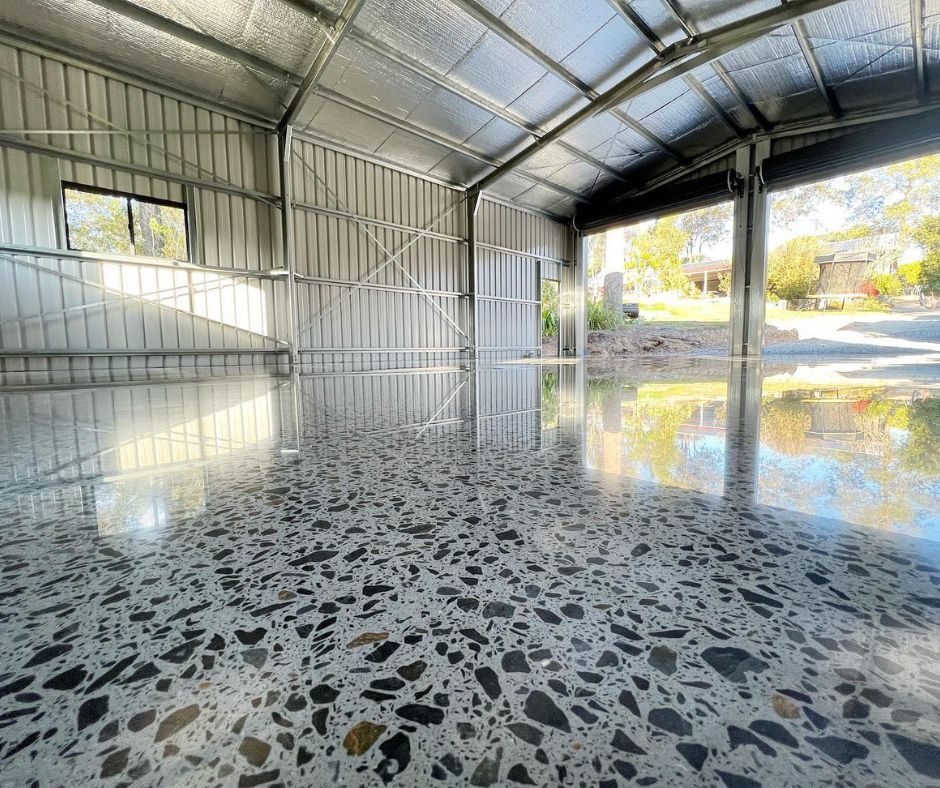
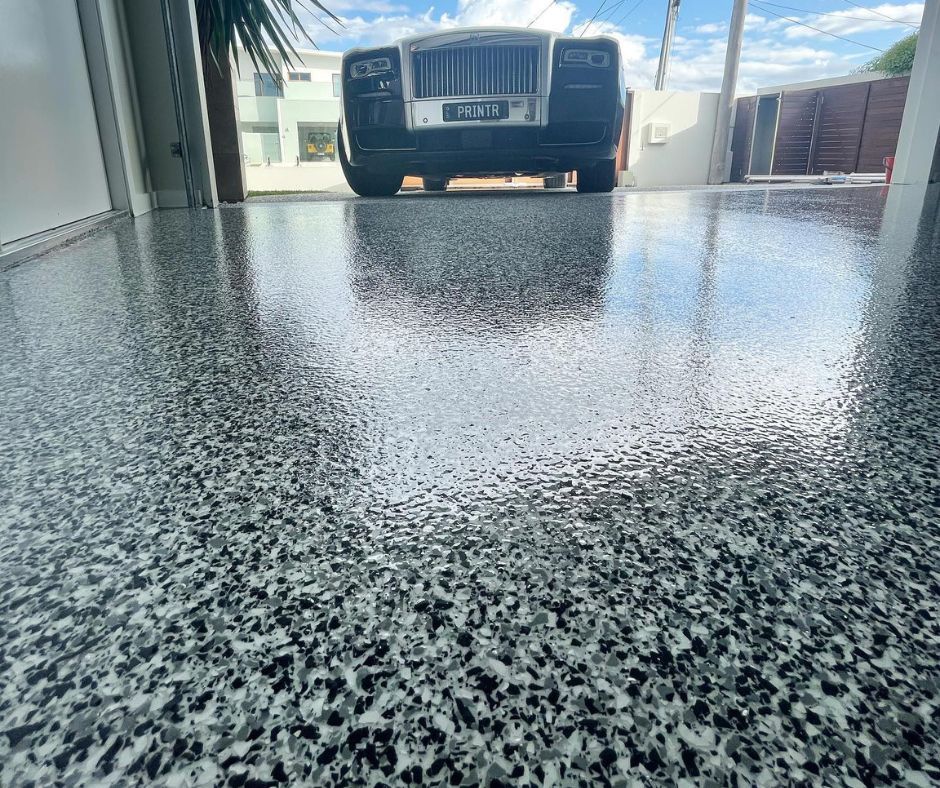
Garages usually need more frequent attention than quiet indoor rooms. Tyre marks, dust, grit, oil drips and chemical spills are all common. Regular sweeping helps stop abrasive dirt from wearing down the finish, while prompt spill clean-up keeps oil and automotive fluids from lingering on the surface.
Patios, Walkways and Pool-Adjacent Spaces
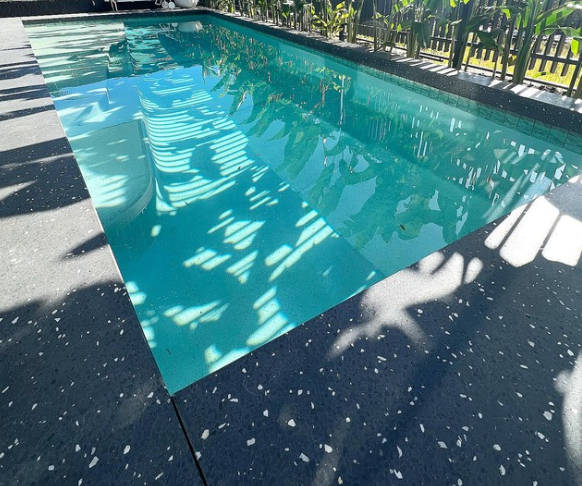
Outdoor epoxy surfaces have a different maintenance pattern. Leaves, sand, moisture and everyday foot traffic all add up, especially around patios and pool areas. That often means more frequent light cleaning to stay ahead of debris rather than waiting for the surface to start looking tired. A quick sweep or rinse can help remove sand, leaf matter and general build-up before it gets ground into the finish.
Home Gyms and Light Commercial Spaces
Home gyms and light commercial areas tend to wear in the same spots over and over. Repeated foot traffic, moved equipment and day-to-day use can all mark the surface if cleaning slips. In these spaces, maintenance is really a mix of routine cleaning and paying close attention to high-use zones before they start looking tired.
Simple Habits that Help Epoxy Finish Last Longer
Reduce dirt and grit build-up
Small particles do real damage over time. Sweep or vacuum regularly so dust, sand and grit are not being ground into the surface every day.
Clean spills before they have time to sit
Oil, grease, chemicals and even stubborn everyday messes are easier to deal with when they are fresh. Quick action protects both the look of the floor and the coating itself.
Be careful with heavy items and repeated impact
Dragging tools, gym gear, furniture or equipment across the floor can leave scratches, gouges or stress marks. Lift where possible, and use protective pads in areas where heavy items stay in contact with the floor.
Pay extra attention to high-traffic areas
Entry points, vehicle paths and the walkways people use without thinking will almost always wear faster. These spots deserve more frequent cleaning and a closer eye than the rest of the floor.
Follow a simple ongoing maintenance routine
The smartest approach is not waiting until the floor looks obviously dirty or worn. A small, consistent routine suited to the way the space is actually used will usually do more for longevity than occasional heavy cleans.
When Cleaning Stops Being Enough
Peeling, bubbling, chips and excessive wear
These are not routine cleaning issues. Peeling, bubbling, chips and heavy wear are stronger signs that the coating itself may need repair or recoating rather than another mop and detergent cycle.
Dull patches that cleaning will not fix
A dull floor is not always a dirty floor. Sometimes it is just residue from the wrong cleaner. Other times, it is a sign that the finish has worn down in specific areas. If repeated gentle cleaning does not improve those patches, it is worth getting the coating assessed.
When repair or recoating makes more sense than repeated cleaning
There is a point where more cleaning becomes a band-aid. If the floor is losing its finish, showing damage or looking patchy no matter what you do, professional repair or recoating is often the better way to protect the original investment. That is not upselling. It is simply knowing when maintenance has reached its limit.
Local Advice Makes a Difference When the Surface Starts Changing
If you are unsure what products are safe for your floor
Not every coating system responds the same way to every cleaner. If you are unsure, expert advice is safer than guessing your way through stronger products.
If the floor is already damaged or losing its finish
Once there is peeling, chipping, bubbling or obvious wear, getting a professional opinion can save time and stop minor issues from turning into bigger ones.
If you want maintenance advice tailored to your property
That is where
Coulson’s Concrete Finishes has a natural edge. We are a small family-owned Gold Coast business known for our premium service, attention to detail and clear communication. Tailored advice is often more useful than generic internet epoxy floor maintenance tips because the way a garage, patio or poolside area is used can vary a lot from suburb to suburb. Coulson’s also states it offers warranty-backed service on its site content.
Keep Your Floor Looking Better for Longer
Once you know the basics, epoxy floor care is straightforward. Done consistently, that protects both the appearance of the floor and the value of the surface underneath.
If your epoxy floor is starting to look dull, worn or harder to clean than it should, it may be time to get expert advice. Coulson’s Concrete Finishes works across the Gold Coast, Brisbane and Northern NSW, offering a tailored approach, clear communication and high-quality workmanship across a range of premium finishes, including epoxy flooring, honed concrete and polished concrete.
Whether you need practical maintenance advice, epoxy floor repairs or a quote for recoating,
getting the right guidance from our team early can help prevent bigger issues later.
Key Takeaways
- Epoxy floor maintenance is simple, but it still matters if you want to protect appearance and long-term durability.
- Regular sweeping and gentle mopping will do most of the heavy lifting for everyday care.
- Abrasive tools and harsh cleaners can damage the finish faster than people expect.
- Spills should be cleaned quickly, especially oil, grease and chemicals.
- Persistent dullness, peeling or chips are good signs that it may be time for professional repair or recoating.
Frequently Asked Questions
How do you maintain an epoxy floor properly?
The basics of good epoxy floor maintenance include sweeping or vacuuming often, mopping with warm water and a mild detergent when needed, cleaning spills quickly, and avoiding abrasive tools or harsh cleaners.
What is the best cleaner for epoxy floors?
For most routine cleans, warm water and a mild detergent are the safest starting point. You usually do not need anything stronger unless there is a specific stain to deal with.
Can you use vinegar on epoxy floors?
It is best not to. Acidic cleaners are among the products to avoid on epoxy flooring because they can affect the finish over time.
Can you use bleach on epoxy flooring?
It is safer to avoid harsh chemical cleaners unless the coating manufacturer specifically says otherwise. Mild cleaning solutions are generally the better choice for routine care.
How often should epoxy floors be cleaned?
That depends on use. Light-use indoor floors may only need weekly attention, while garages, gyms and commercial spaces often need cleaning several times a week or even daily in busy zones.
What should you not use on epoxy flooring?
Avoid steel wool, abrasive pads, harsh scrubbing, acidic cleaners, citrus-based products, strong solvents and heavy machinery that is too aggressive for the coating.
Can you pressure wash an epoxy floor?
It is generally not recommended unless you are certain the coating and method can handle it. High pressure can be too harsh and may damage the surface if used incorrectly.
How do you clean oil off an epoxy garage floor?
Wipe up the spill first, then clean with warm water and a mild detergent. For leftover residue, move up carefully to a suitable epoxy-safe cleaner and test it before wider use.
Why does my epoxy floor look dull after cleaning?
It could be residue from using too much product, or it could be wear in the finish itself. If a proper, gentle clean does not improve it, the coating may need closer inspection.
How do you know when an epoxy floor needs recoating?
Peeling, bubbling, chips, excessive wear and dull patches that do not improve with cleaning are all common signs that repair or recoating may be the better option.